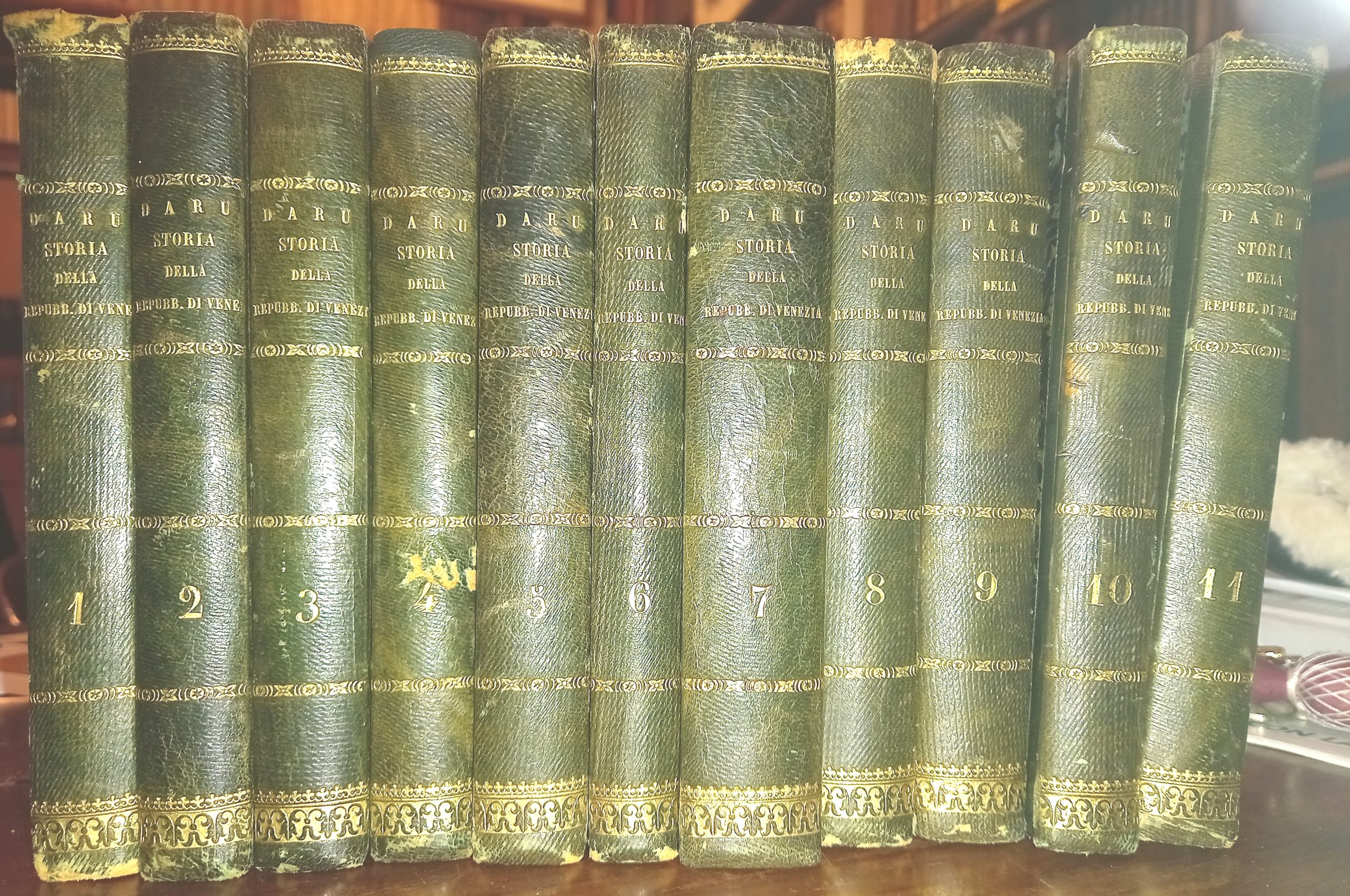
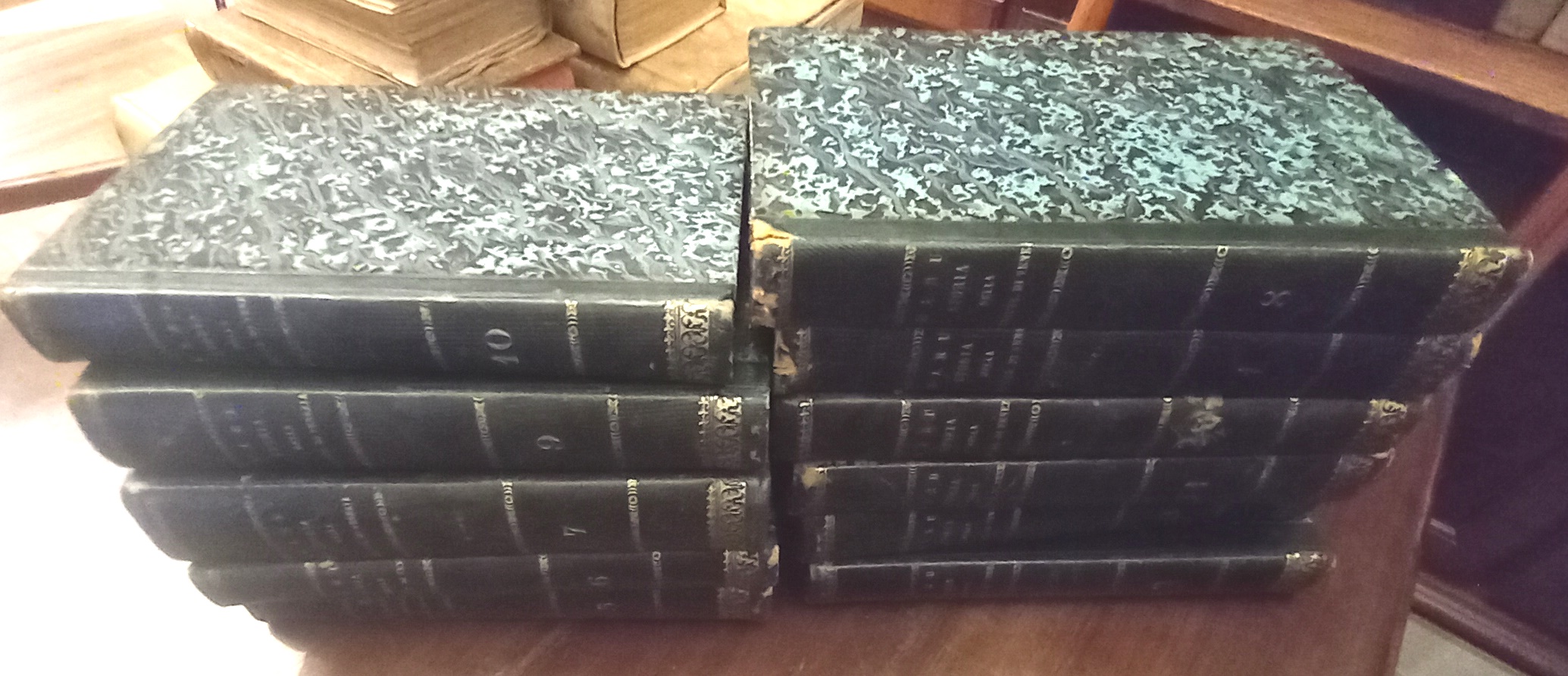
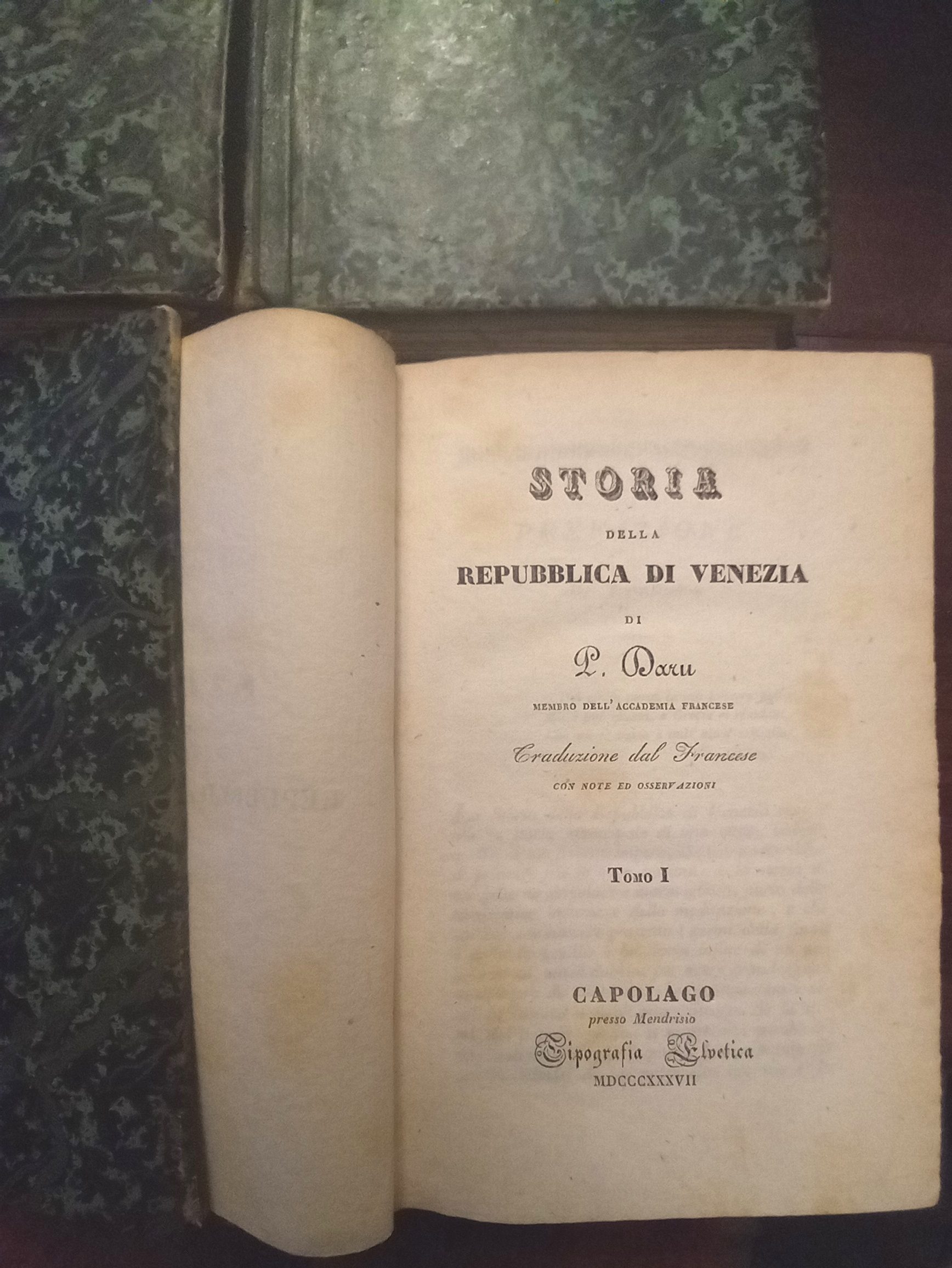
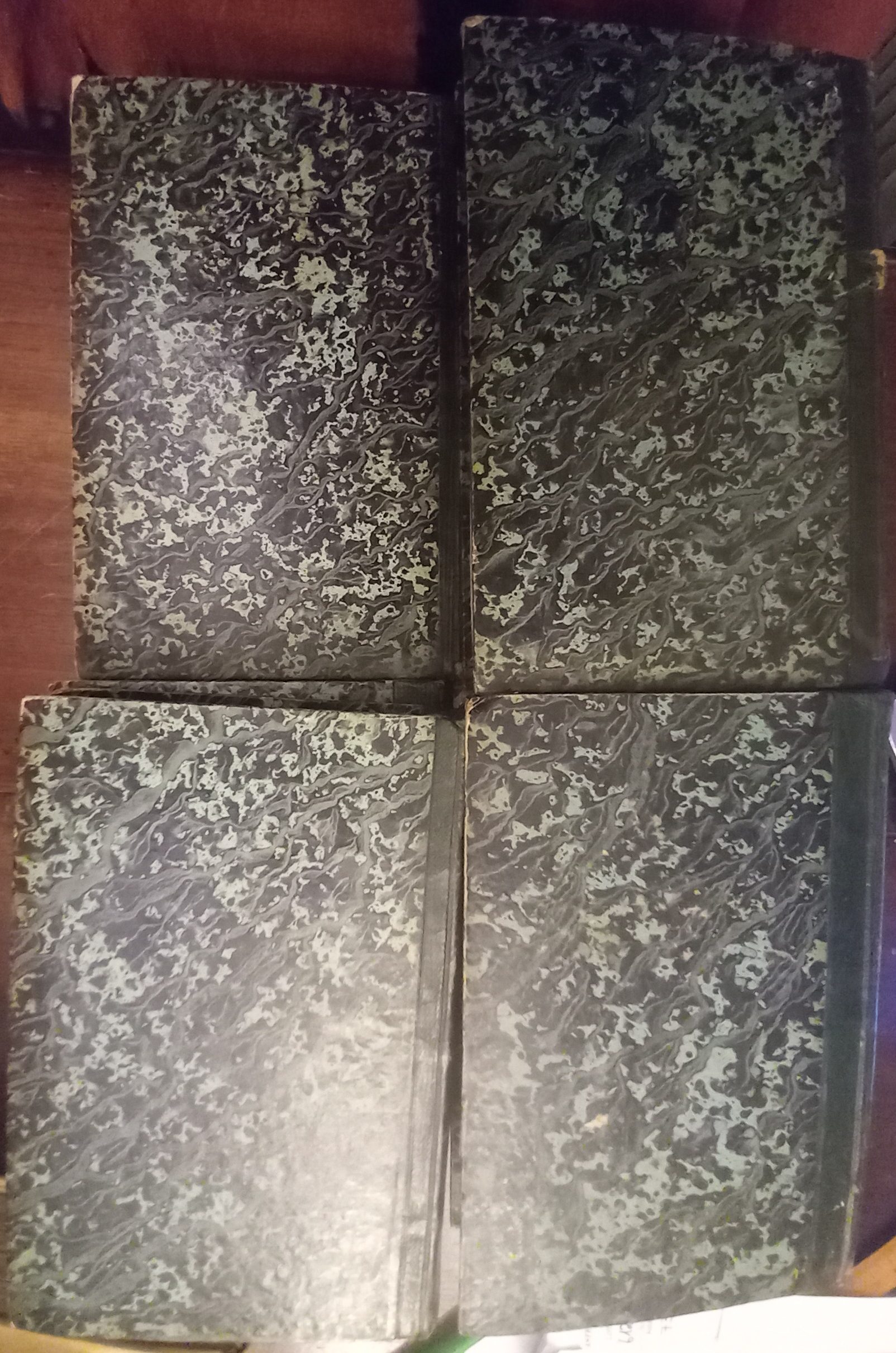
In-8 (17 cm) 11 voll. 311 (1); 388; 441 (1); XXXII 363; 410; 304; 545 (1); 340; 410; 351 (1); 365 (1). Elegante legatura in mezza pelle, piatti cartonati rivestiti di carta marmorizzata, fregi e caratteri dorati al dorso. Storia di Venezia dalle origina alla caduta: gli ultimi due volumi trattano temi relativi alle scienze, lettere ed arti de Veneziani e i documenti, relativi agli eventi narrati. Toccò temi assai cari ai veneziani soprattutto in relazione all’amministrazione delle provincie venete. Venne quindi Attaccato dal Conte Tiepolo che diede alle stampe un testo dal titolo: Discorsi sulla storia di Veneta cioè rettificazione di alcuni equivoci riscontrati nella storia di Venezia del sig. Darù(1828). E da Leonardo Manin che scrisse: Confutazione della storia veneziana di M. Darù circa la mala amministrazione delle province governate da’ veneziani (1838).” Darù Pierre-Antoine-Noël-Bruno, conte. Nacque a Montpellier il 12 gennaio 1767; morì il 5 settembre 1829 nella sua terra di Bécheville. Nel 1784 il padre gli acquistò la carica di “commissaire provincial des guerres” in Linguadoc. Una sua lettera, male interpretata dal comitato rivoluzionario di Montpellier, gli valse la momentanea sospensione e un periodo di stretta vigilanza. Reintegrato nel posto, rese servizî segnalati presso il Ministero della guerra e presso le armate operanti della repubblica. Impareggiabile organizzatore, fu fatto da Napoleone intendente della sua casa militare e nominato nel 1809 conte dell’Impero. Toccò a lui, dopo la convenzione di Alessandria, dopo la pace di Presburgo, dopo la convenzione di Königsberg, dopo il trattato di Tilsitt, il gravoso incarico di assicurare l’esecuzione dei patti. Fu intendente dei paesi conquistati nella campagna d’Austria; intendente generale della Grande Armata nel 1806, dell’Armata di Germania nel 1809. Ministro segretario di stato nell’aprile 1811, diresse la preparazione logistica della spedizione di Russia ed ebbe nella ritirata di Mosca l’incarico dell’Intendenza generale: fu lui che curò l’evacuazione di Vilna e di Kovno e comandò gli ultimi movimenti dell’esercito francese sul suolo russo. Dal 20 novembre del 1813 alla caduta dell’Impero (maggio 1814) fu direttore, e, durante i Cento giorni, ministro, dell’amministrazione della Guerra. Fu attivo anche nel campo tecnico e politico. Lavorò alla commissione legislativa dei Cinquecento, al perfezionamento del codice militare. Membro del Tribunato (1802), della camera dei Pari (1819), fu relatore in questioni importanti di finanza, d’istruzione, di amministrazione militare. Affrontò problemi squisitamente politici e parlò contro il progetto relativo al “droit d’aînesse” (5 aprile 1826) e contro il progetto di legge restrittivo della libertà di stampa (26 marzo 1829).CICOGNA 627. BRUNET II 524. GRAESSE II 336. In-8 (17 cm) 11 vols. 311 (1); 388; 441 (1); XXXII 363; 410; 304; 545 (1); 340; 410; 351 (1); 365 (1). Elegant half leather binding, cardboard boards covered in marbled paper, gilded decorations and characters on the spine. History of Venice from its origins to its fall: the last two volumes deal with themes relating to the sciences, letters and arts of the Venetians and the documents relating to the narrated events. It touched on themes very dear to the Venetians, especially in relation to the administration of the Venetian provinces. It was then attacked by Count Tiepolo who published a text entitled: Discourses on the history of Venice, that is, rectification of some misunderstandings found in the history of Venice by Mr. Darù (1828). And by Leonardo Manin who wrote: Refutation of the Venetian history of M. Darù regarding the bad administration of the provinces governed by the Venetians (1838).” Darù Pierre-Antoine-Noël-Bruno, count. He was born in Montpellier on 12 January 1767; he died on 5 September 1829 in his land of Bécheville. In 1784 his father bought him the position of “commissaire provincial des guerres” in Languedoc. A letter of his, misinterpreted by the revolutionary committee of Montpellier, earned him temporary suspension and a period of strict surveillance. Reinstated in the post, he rendered notable services to the Ministry of War and to the active armies of the Republic. An unrivalled organiser, he was made by Napoleon intendant of his military household and nominated in 1809 count of the Empire. It fell to him, after the Convention of Alexandria, after the Peace of Pressburg, after the Convention of Königsberg, after the Treaty of Tilsitt, had the onerous task of ensuring the execution of the agreements. He was intendant of the countries conquered in the Austrian campaign; intendant general of the Grande Armée in 1806, of the German Army in 1809. Minister Secretary of State in April 1811, he directed the logistical preparation of the Russian expedition and was in charge of the General Intendancy during the retreat from Moscow: it was he who supervised the evacuation of Vilna and Kovno and commanded the last movements of the French army on Russian soil. From 20 November 1813 to the fall of the Empire (May 1814) he was director, and, during the Hundred Days, minister, of the administration of War. He was also active in the technical and political fields. He worked on the legislative commission of the Five Hundred, on the improvement of the military code. Member of the Tribunate (1802), of the Chamber of Peers (1819), he was a rapporteur on questions important in finance, education, and military administration. He addressed purely political issues and spoke out against the bill relating to the “right of aînesse” (April 5, 1826) and against the bill restricting freedom of the press (March 26, 1829).