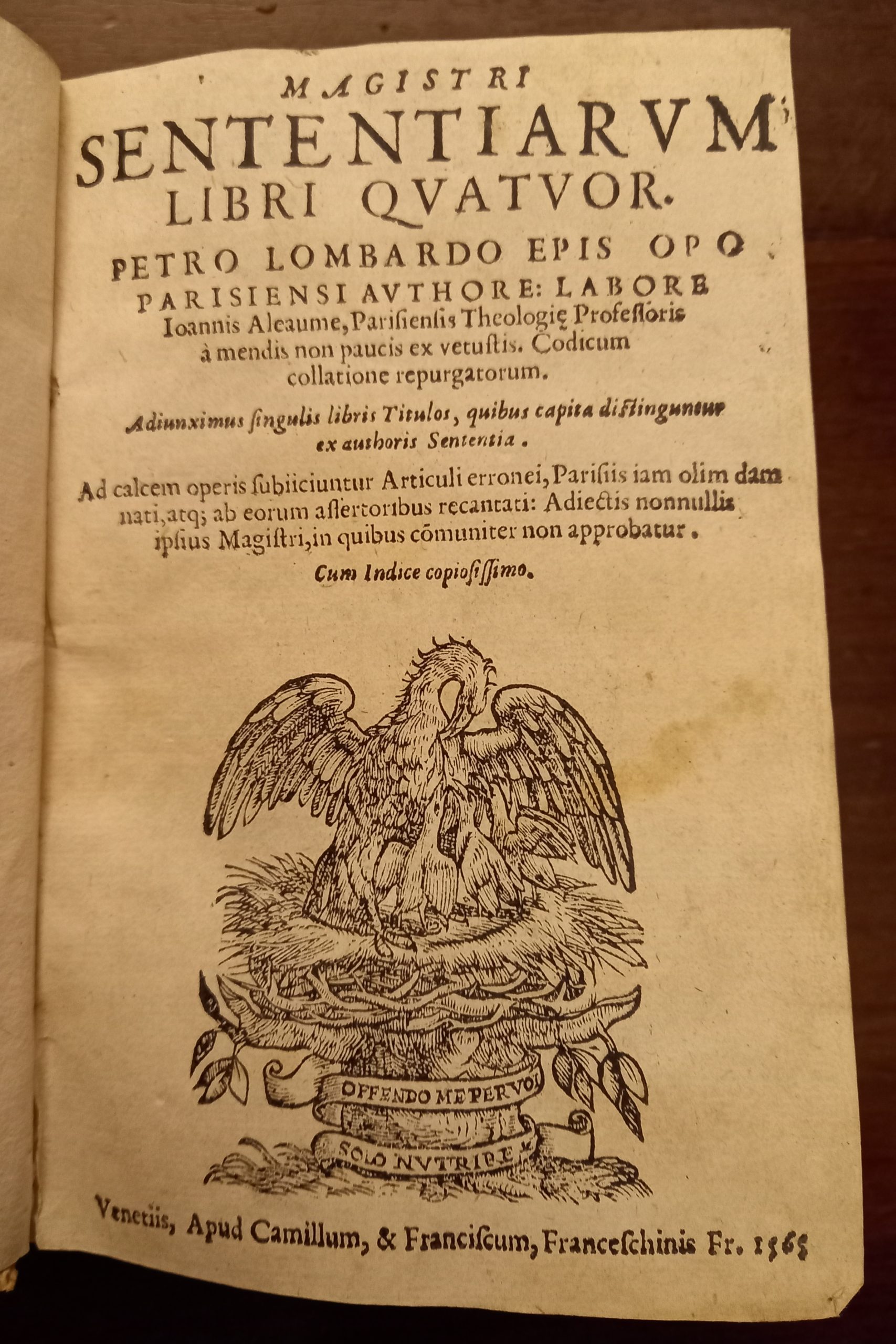
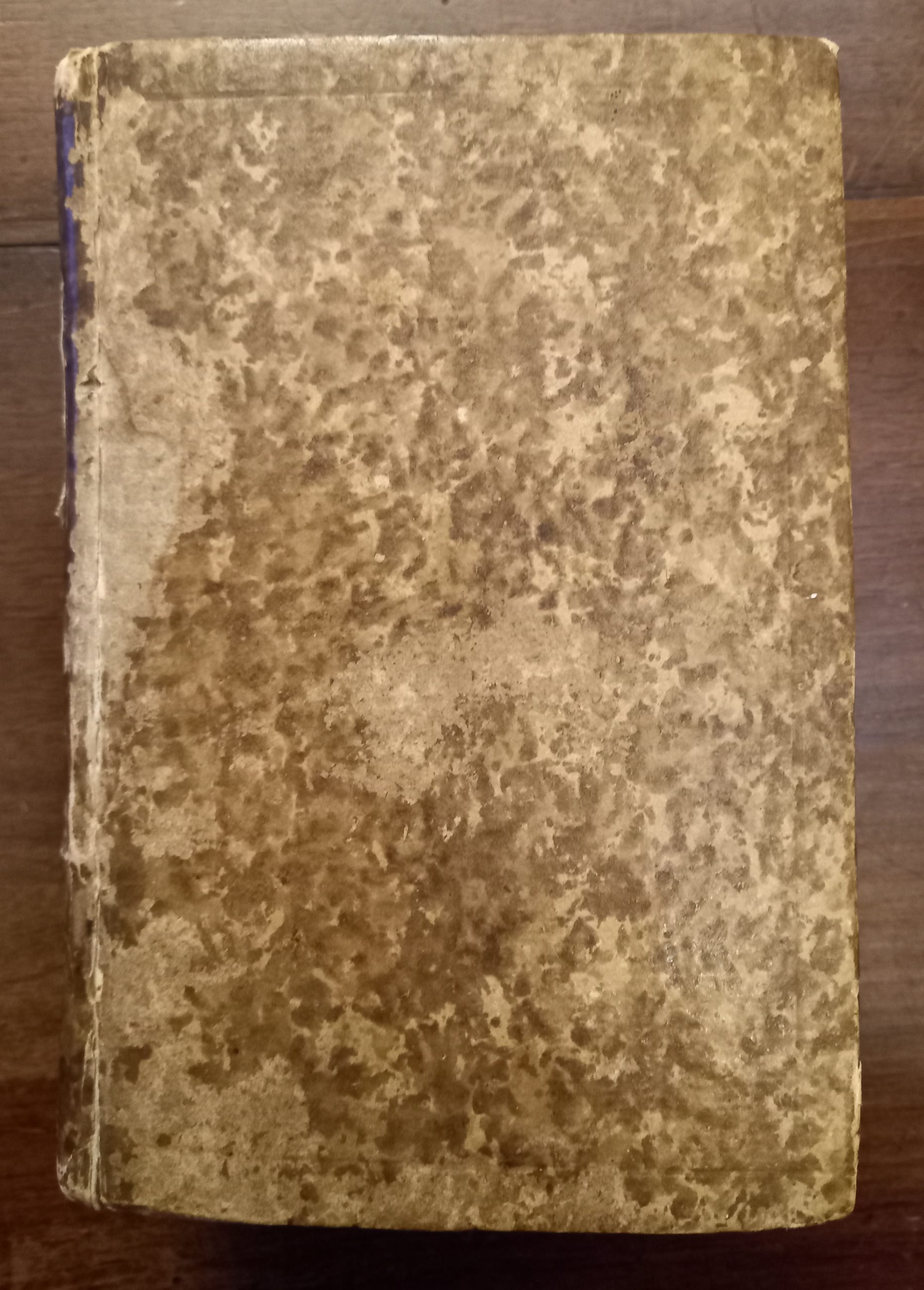
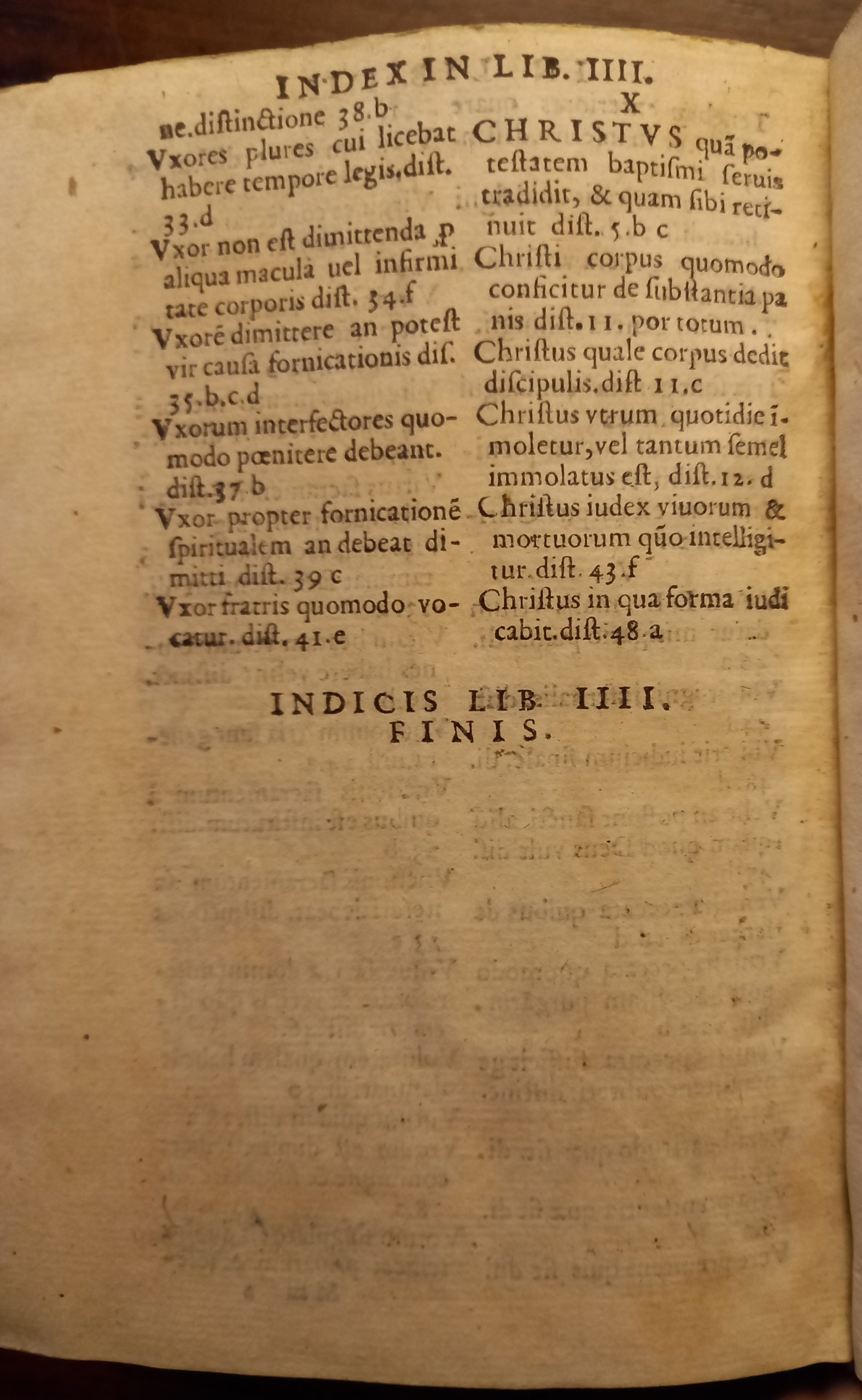

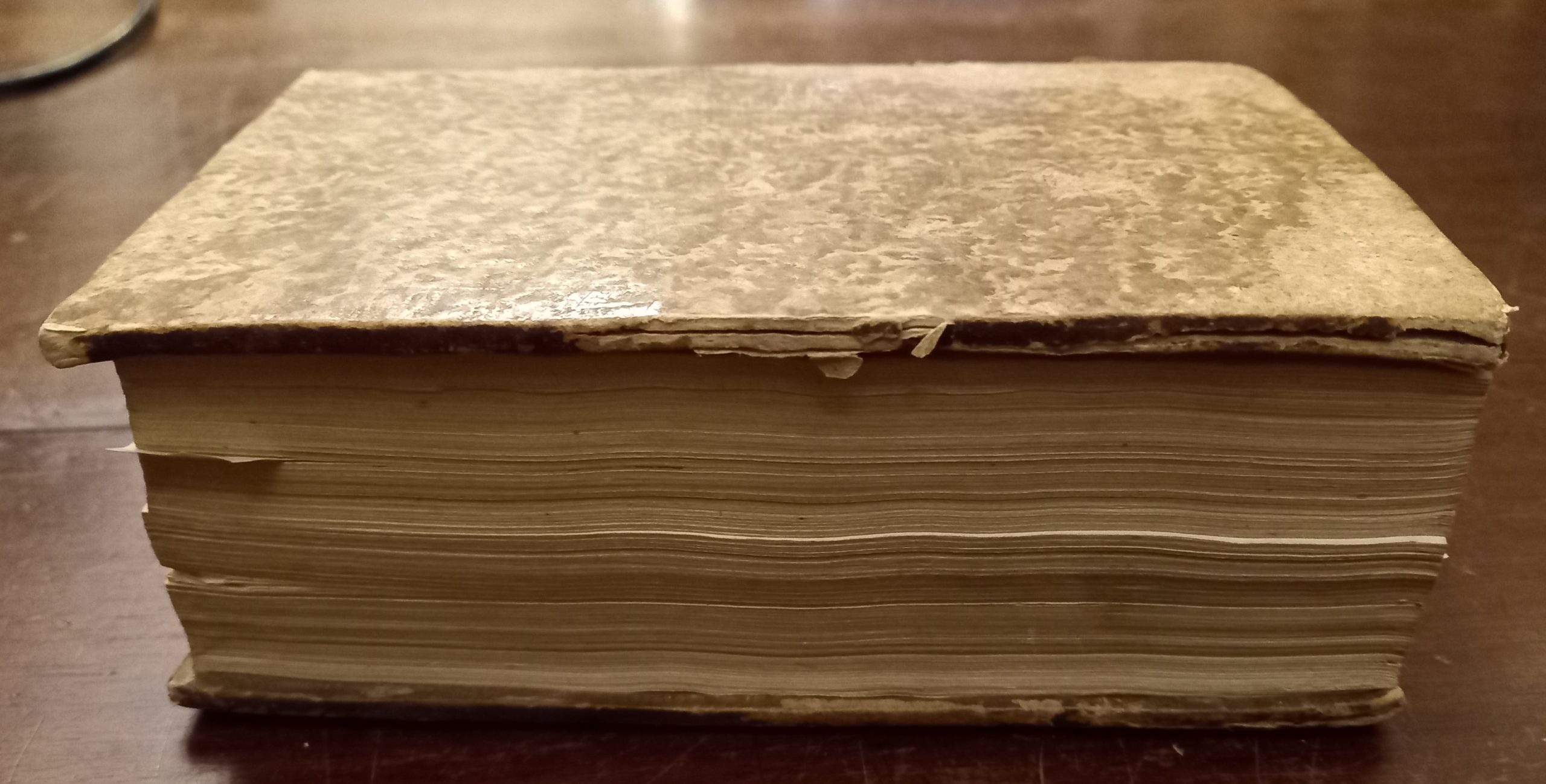
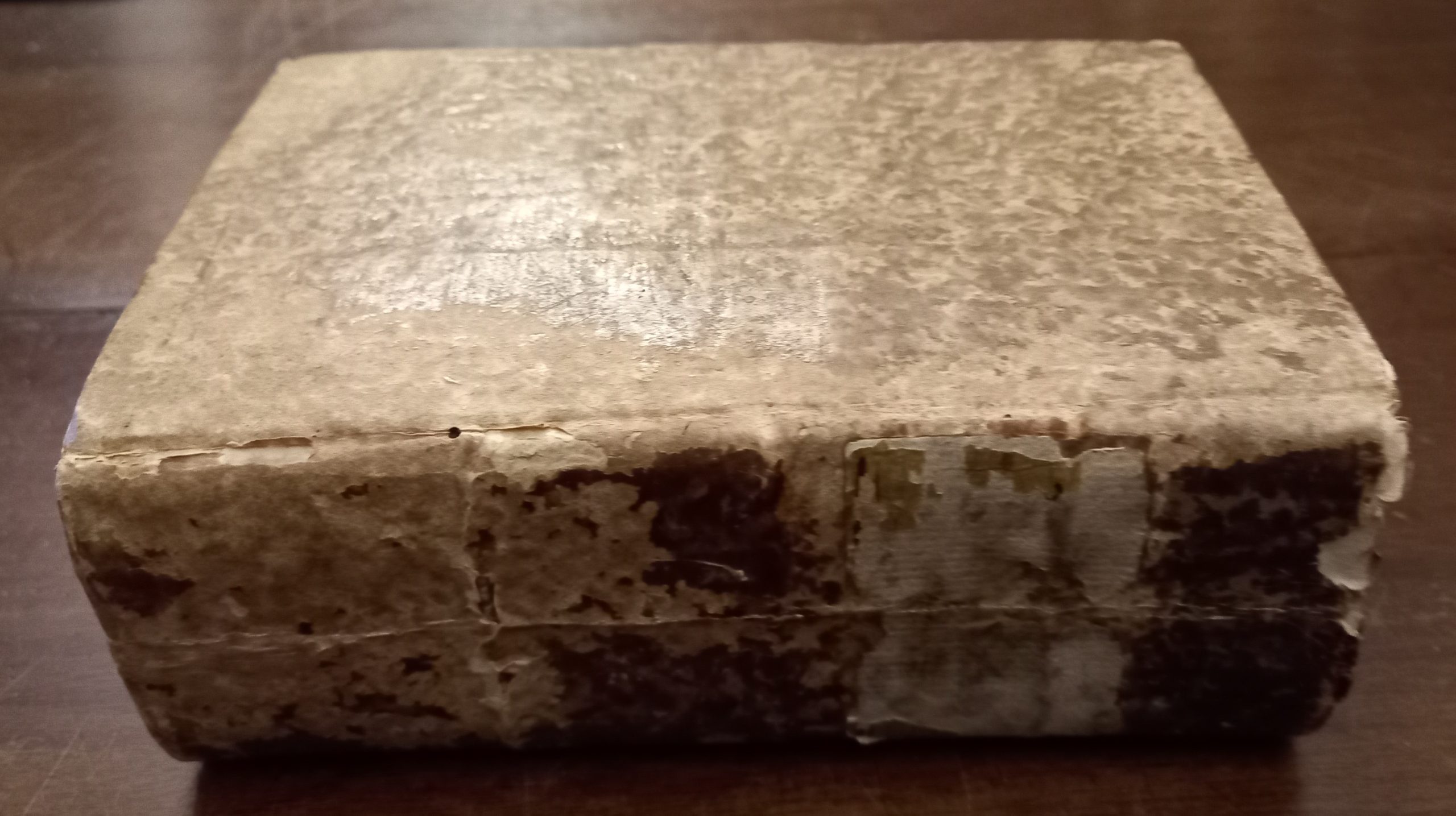
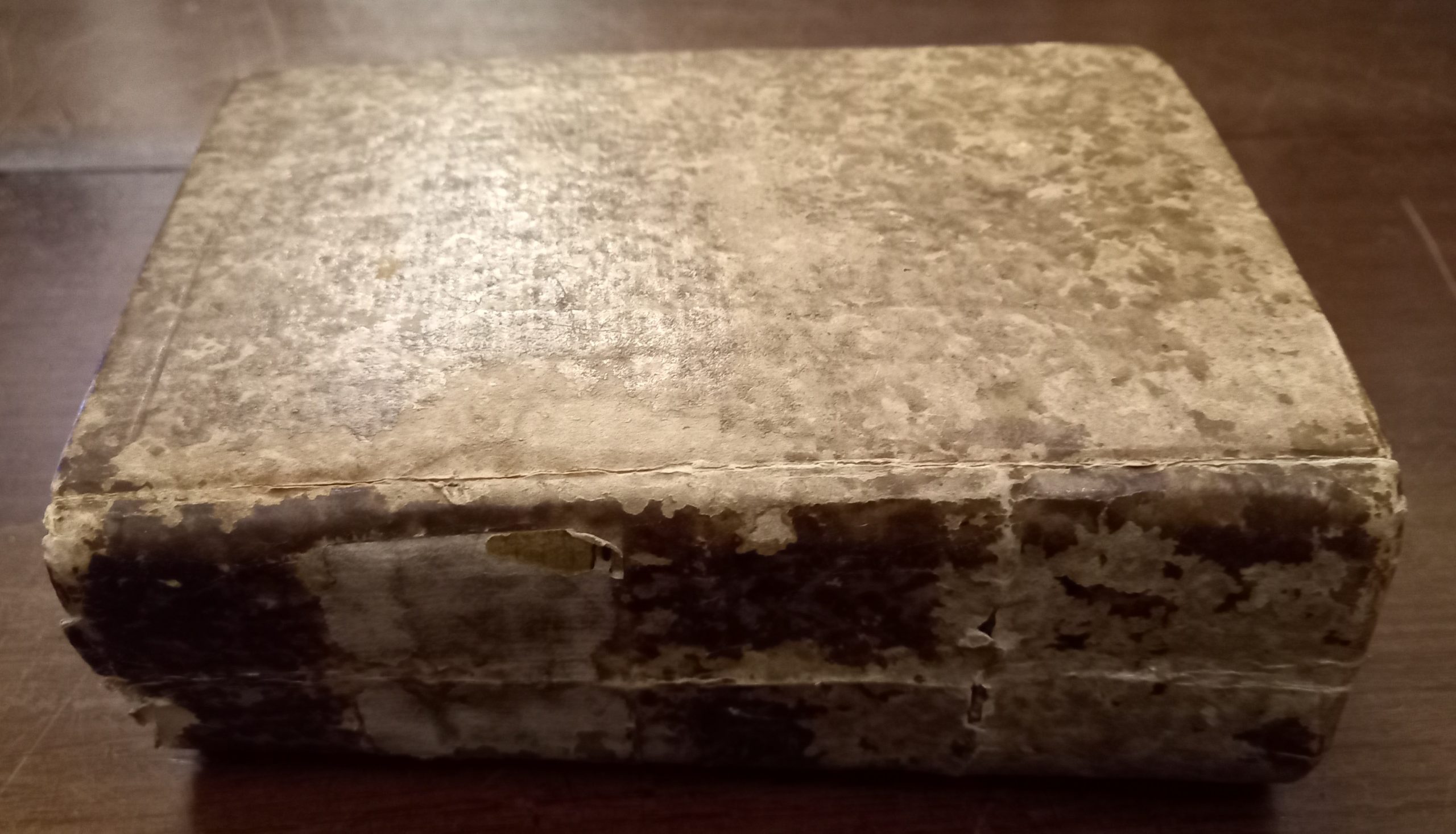
In-8 (15 cm) (8) c. 456 c. (3) c. Marca editoriale xilografata al frontespizio rappresentante un pellicano che si squarcia il petto per nutrire i piccoli con motto: Offendo me per voi solo nutrire. Piatti cartonati rivestiti di carta marmorizzata, ora piuttosto usurata. Pietro Lombardo (1095-1160) nacque probabilmente tra il 1095 e il 1100 a Lumellogno, nei pressi di Novara. Sono tuttavia le Sentenze a costituire l’opera principale di Pietro Lombardo che gli valse l’appellativo di Magister sententiarum. Si tratta di una raccolta di sentenze teologiche ordinate sistematicamente in quattro libri, a loro volta suddivisi in capitoli, in cui la materia teologica è presentata sotto forma di questioni, per rispondere alle quali Pietro riporta prevalentemente, ma non esclusivamente, estratti da commentari biblici, opere patristiche, o altri scritti di autori medievali. Lo scopo dell’opera è quello di raccogliere in un solo scritto tutto il materiale indispensabile per l’insegnamento della teologia agli studenti. L’opera fu composta in una prima versione tra il 1155 e il 1157, per poi subire aggiunte e correzioni tra il 1157 e il 1158.Nel primo libro, Pietro affronta i problemi inerenti la trinità divina e l’unicità della sua essenza. Nel secondo libro, è l’opera di Dio creatore che viene discussa. Vengono quindi approfondite le questioni riguardanti il libero arbitrio dell’uomo, gli effetti della colpa dei progenitori del genere umano, il rapporto con la grazia divina e l’esercizio della virtù. Nel terzo libro Pietro affronta tutte le questioni riguardanti l’incarnazione del Verbo divino, strumento principale della redenzione del genere umano. Una lunga sezione del terzo libro è dedicata alla dottrina delle virtù e al loro rapporto con i doni dello Spirito, oltre che ai dieci comandamenti. Nel quarto libro, viene presentata la dottrina dei sacramenti e una larga parte è riservata al matrimonio. Le Sentenze si concludono con alcuni capitoli sui novissimi.Esse esercitarono un’enorme influenza nella storia del pensiero filosofico e teologico occidentale, sollecitando dibattiti già nei primi decenni della loro diffusione, e in modo più importante dopo il riconoscimento ufficiale che la dottrina trinitaria di Pietro ottenne da parte di papa Innocenzo III nel 1215, in occasione del IV Concilio Lateranense. La divisione del testo che oggi conosciamo (in distinzioni, capitoli e articoli) risale ad Alessandro di Hales, considerato il primo maestro dell’università parigina a utilizzare le Sententiae come testo di base per l’insegnamento della teologia tra gli anni 1223 e 1227. Proprio a causa di questo ruolo e della loro introduzione nel curriculum di formazione dei baccelieri di teologia, le Sententiae furono oggetto di numerosi commentari fino almeno a Martin Lutero, anche lui commentatore dell’opera. Woodcut imprint on the title page depicting a pelican tearing open its breast to feed its young, with the motto: I offend myself, only to feed you. Cardboard covers covered in marbled paper, now quite worn. Peter Lombard (1095-1160) was probably born between 1095 and 1100 in Lumellogno, near Novara. However, the Sentences constitute Peter Lombard’s principal work, earning him the title of Magister sententiarum. It is a collection of theological sentences systematically arranged in four books, each in turn divided into chapters, in which the theological subject matter is presented in the form of questions. In response to these questions, Peter cites primarily, but not exclusively, excerpts from biblical commentaries, patristic works, or other writings by medieval authors. The purpose of the work is to gather together in a single work all the essential material for teaching theology to students. The work was composed in an initial version between 1155 and 1157, and underwent additions and corrections between 1157 and 1158. In the first book, Peter addresses issues inherent in the divine Trinity and the unity of its essence. In the second book, the work of God the Creator is discussed. Questions regarding human free will, the effects of the sin of the human race’s progenitors, the relationship with divine grace, and the exercise of virtue are then explored. In the third book, Peter addresses all the questions regarding the Incarnation of the Divine Word, the principal instrument of the redemption of the human race. A long section of the third book is dedicated to the doctrine of the virtues and their relationship with the gifts of the Spirit, as well as the Ten Commandments. In the fourth book, the doctrine of the sacraments is presented, and a large section is devoted to marriage. The Sentences conclude with several chapters on the last things. They exerted an enormous influence on the history of Western philosophical and theological thought, sparking debate already in the first decades of their dissemination, and more significantly after the official recognition of Peter’s Trinitarian doctrine by Pope Innocent III in 1215, during the Fourth Lateran Council. The division of the text as we know it today (into distinctions, chapters, and articles) dates back to Alexander of Hales, considered the first professor at the University of Paris to use the Sententiae as a basic text for teaching theology between 1223 and 1227. Precisely because of this role and their introduction into the curriculum for bachelor’s theology degrees, the Sententiae were the subject of numerous commentaries at least up to the time of Martin Luther, who also commented on the work.