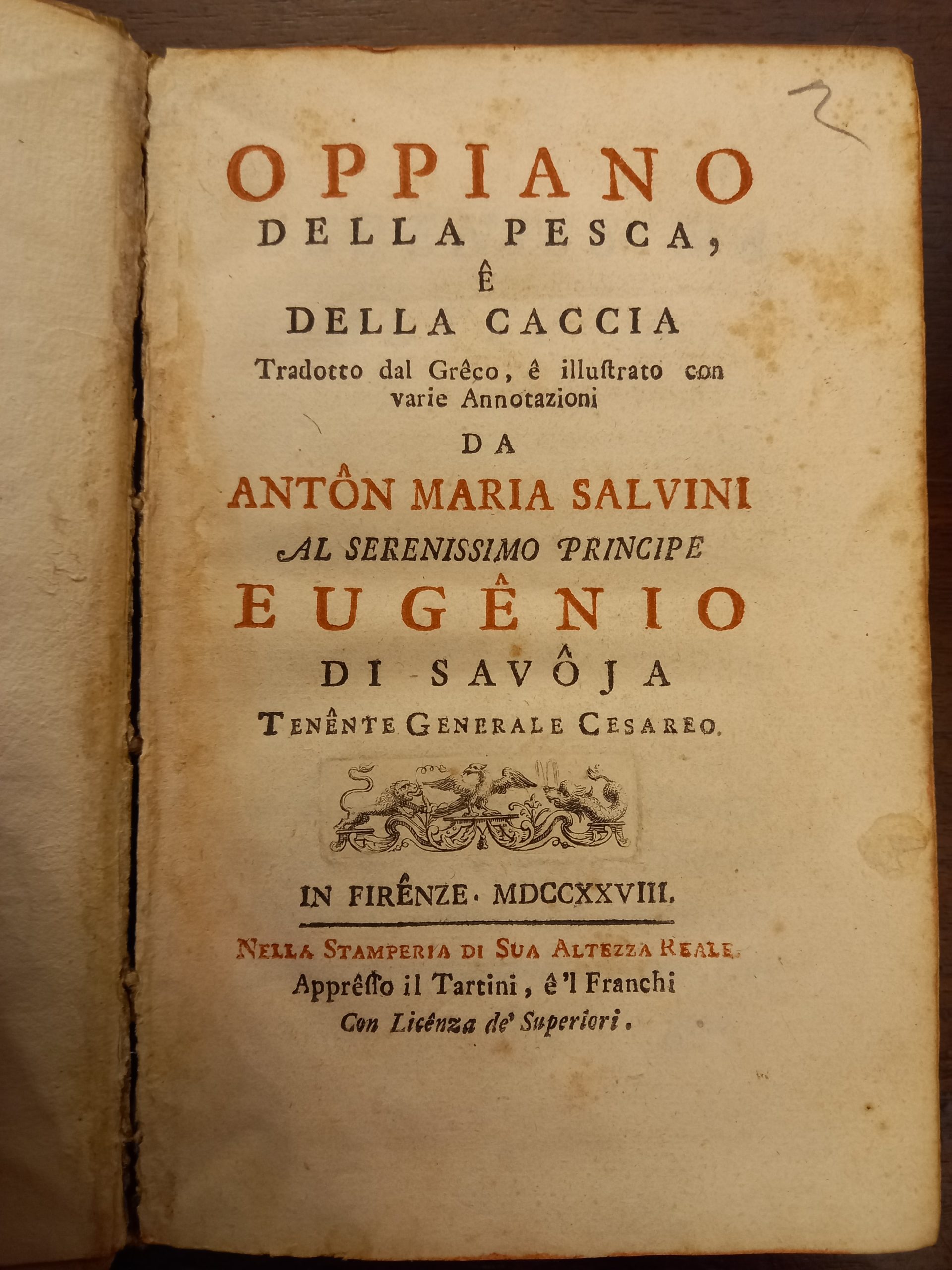
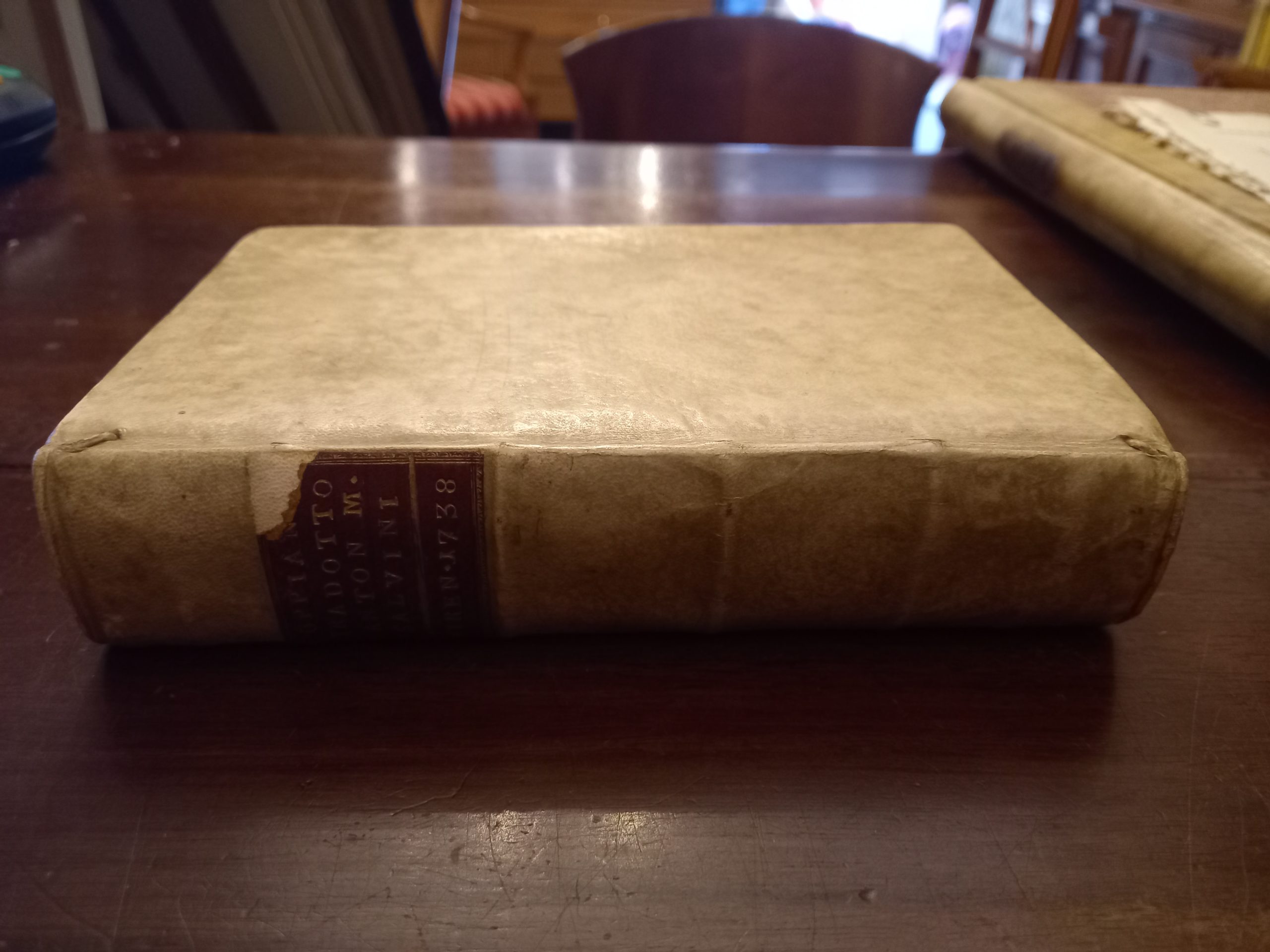
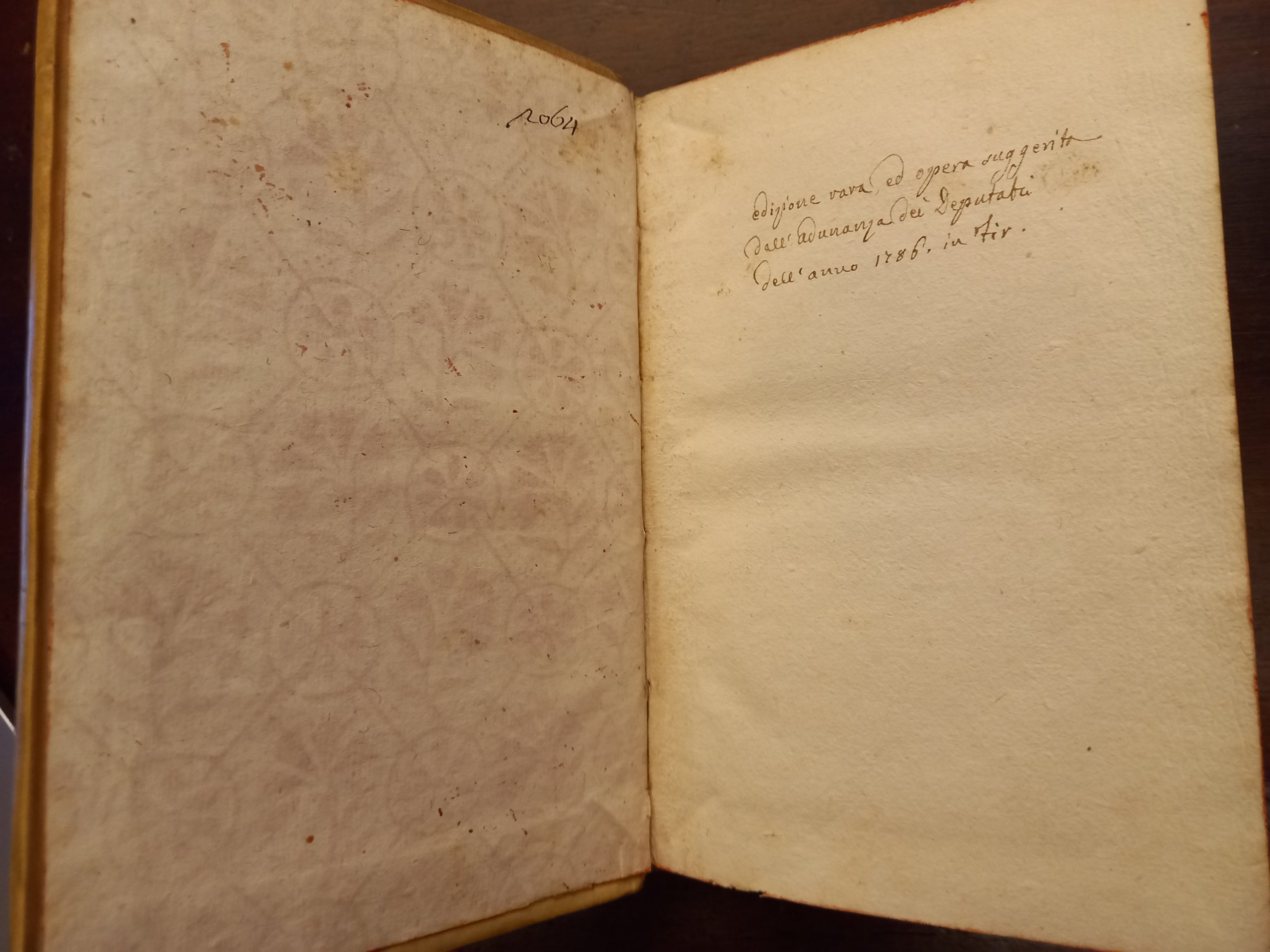
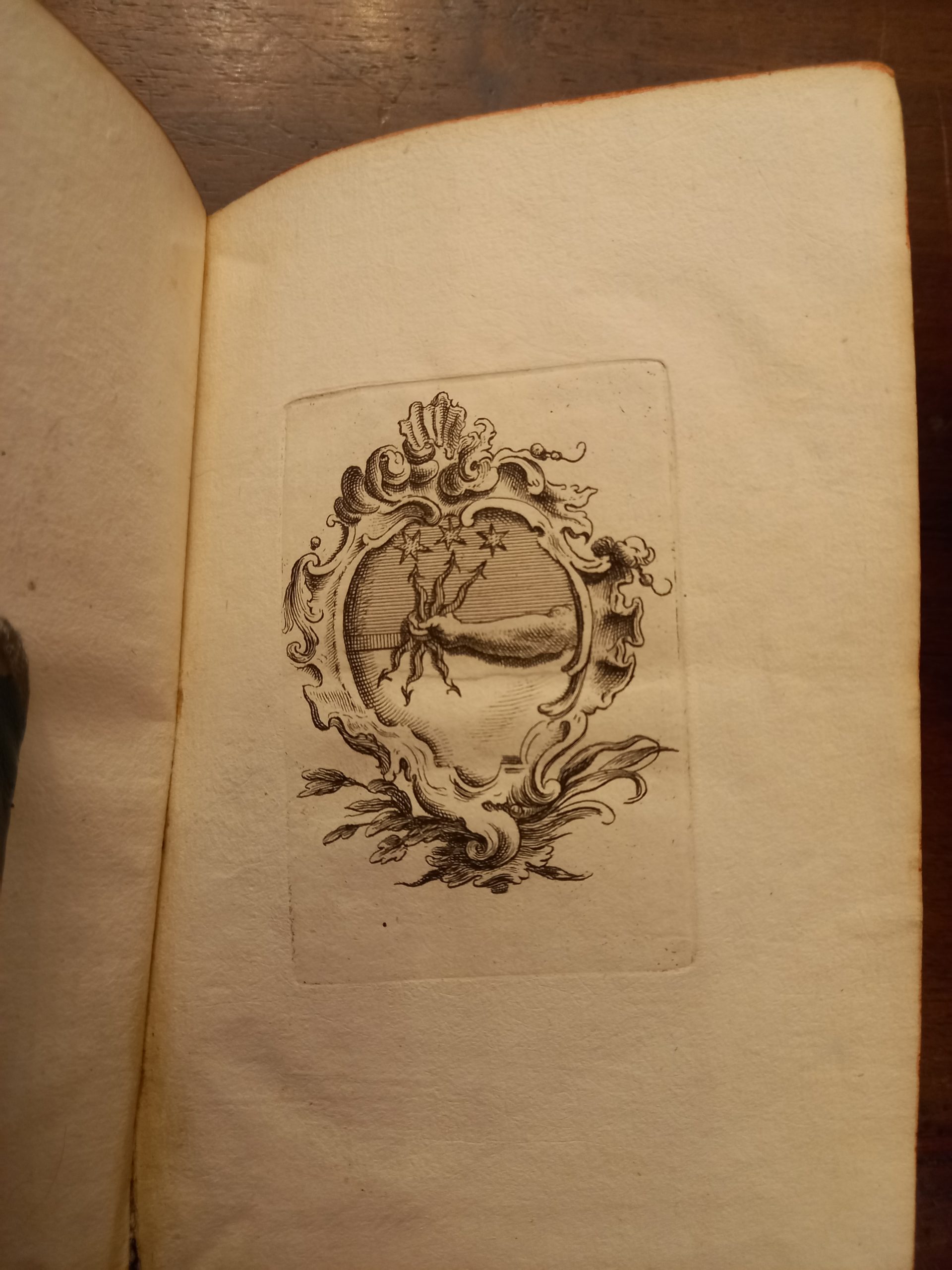
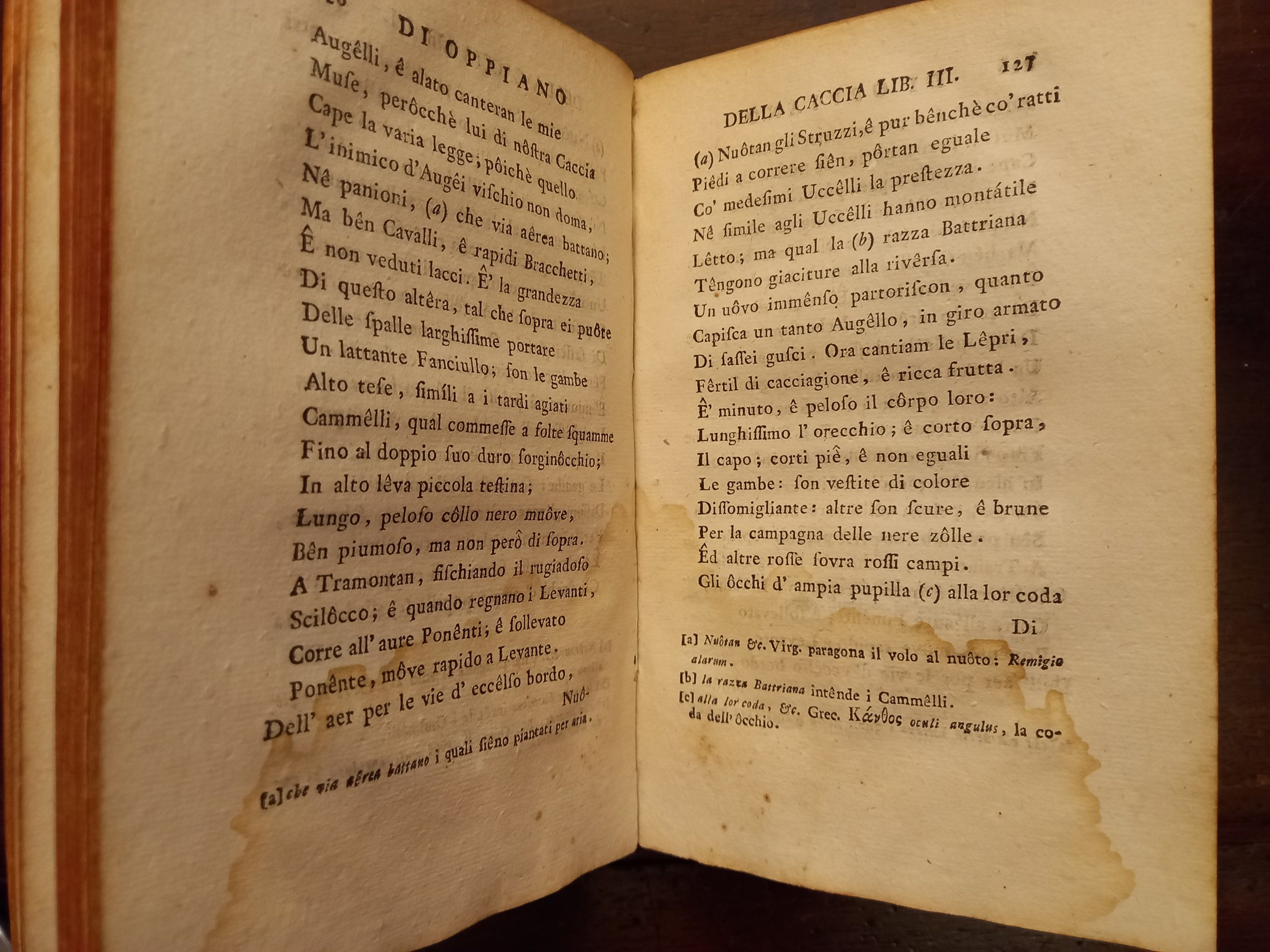
In-8 (17 cm) XVII (1) 510 (2). Marca editoriale incisa al frontespizio, stampato in rosso e nero. Antiporta calcografica. Piena pergamena coeva. Tagli rossi. Oppiano di Apamea (in greco: Ὀππιανός, Oppianòs) (Apamea (o Pella), Seconda metà II sec. d.C. – dopo il 212 d.C.?) è stato un poeta greco antico. Oppiano, nativo di Apamea, sarebbe vissuto durante il regno del dell’imperatore Caracalla. La sua opera, comunque, è spesso accreditato al più famoso in precedenza Oppiano di Corico in Cilicia (l’attuale sud della Turchia) ed è possibile che il suo vero nome non fosse Oppiano, anche se divenne noto come tale dalla confusione dei due scrittori. Ad Oppiano è attribuito, nei manoscritti, un poema sulla caccia (Cynegetica), dedicato a Caracalla, verosimilmente dopo il 211. L’opera, di 2144 versi esametri, in quattro libri, inizia, nel libro I, dopo il topico proemio, con la descrizione del cacciatore ideale, della sua attrezzatura e dei cani da caccia. Nel libro II (di vv. 628), il poeta si cimenta con la descrizione di svariati animali cacciabili con il cane: toro, cervo, antilope, gazzella, capra e pecora, elefante, rinoceronte, pantera, gatto, scoiattolo, riccio e toporagno, scimmia. La descrizione continua nel libro III, che si apre con un secondo proemio: leone, leopardo, lince, orso, asino, cavallo, lupo e iena, tigre, cinghiale, porcospino, volpe, giraffa). Infine, nel libro IV, un proemio conclusivo apre la descrizione sulla caccia ai leoni, leopardi, orsi, gazzelle e volpi). L’opera ha una sovrabbondanza di similitudini che, spesso, assumono un tono quasi grottesco e risulta, inoltre, incompiuta, arrestandosi dopo alcune informazioni sulla sagacia delle volpi; essa fu edita per la prima volta da Aldo Manuzio nel 1517 a cura di Lorenzo Lippi, insieme all’opera sulla pesca di Oppiano di Anazarbo. Una prima traduzione italiana in versi fu quella del Salvini, pubblicata a Firenze nel 1728. Sempre a questo Oppiano si deve il poema sulla caccia con il vischio, ossia gli Ixeutikà, in 3 libri, di cui resta una parafrasi in prosa composta da un certo Eutecnio in età medievale. Dedica a Eugenio di Savoia. Ottimo esemplare.In-8 (17 cm) XVII (1) 510 (2). Publisher’s mark engraved on the title page printed in red and black. Contemporary full parchment. Red edges. Oppian of Apamea (Greek: Ὀππιανός, Oppianòs) (Apamea (or Pella), Second half of the 2nd century AD – after 212 AD?) was an ancient Greek poet. Oppian, a native of Apamea, would have lived during the reign of the emperor Caracalla. His work, however, is often credited to the more famous earlier Oppian of Corycus in Cilicia (present-day southern Turkey) and it is possible that his real name was not Oppian, although he became known as such from the confusion of the two writers. Oppian is attributed in manuscripts to a poem on hunting (Cynegetica), dedicated to Caracalla, likely after 211. The work, of 2,144 hexameter verses, in four books, begins in Book I, after the topical proem, with a description of the ideal hunter, his equipment, and hunting dogs. In Book II (of 628 lines), the poet attempts to describe various animals that can be hunted with dogs: bull, deer, antelope, gazelle, goat and sheep, elephant, rhinoceros, panther, cat, squirrel, hedgehog and shrew, monkey. The description continues in Book III, which opens with a second proem: lion, leopard, lynx, bear, donkey, horse, wolf and hyena, tiger, wild boar, porcupine, fox, giraffe). Finally, in Book IV, a concluding preface opens the description of the hunt for lions, leopards, bears, gazelles, and foxes. The work is overflowing with similes that often take on an almost grotesque tone, and is also incomplete, stopping after some information on the sagacity of foxes. It was first published by Aldus Manutius in 1517, edited by Lorenzo Lippi, together with the work on fishing by Oppian of Anazarbus. The first Italian translation into verse was that of Salvini, published in Florence in 1728. Oppian also wrote the poem on hunting with mistletoe, the Ixeutikà, in three books, of which a prose paraphrase composed by a certain Eutechnius in the Middle Ages survives. Dedicated to Eugene of Savoy. An excellent copy.