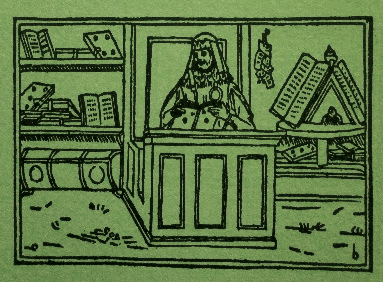


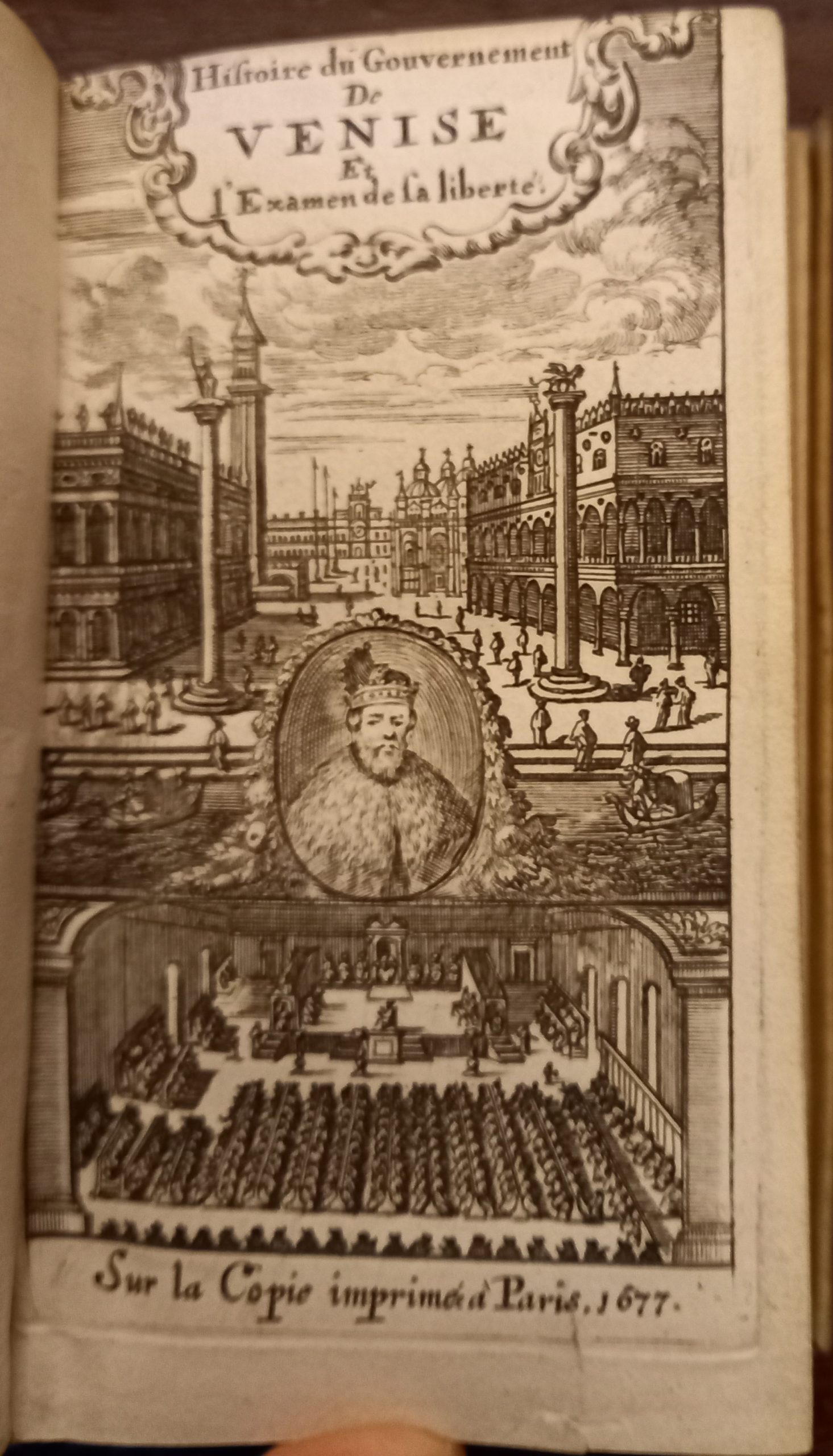
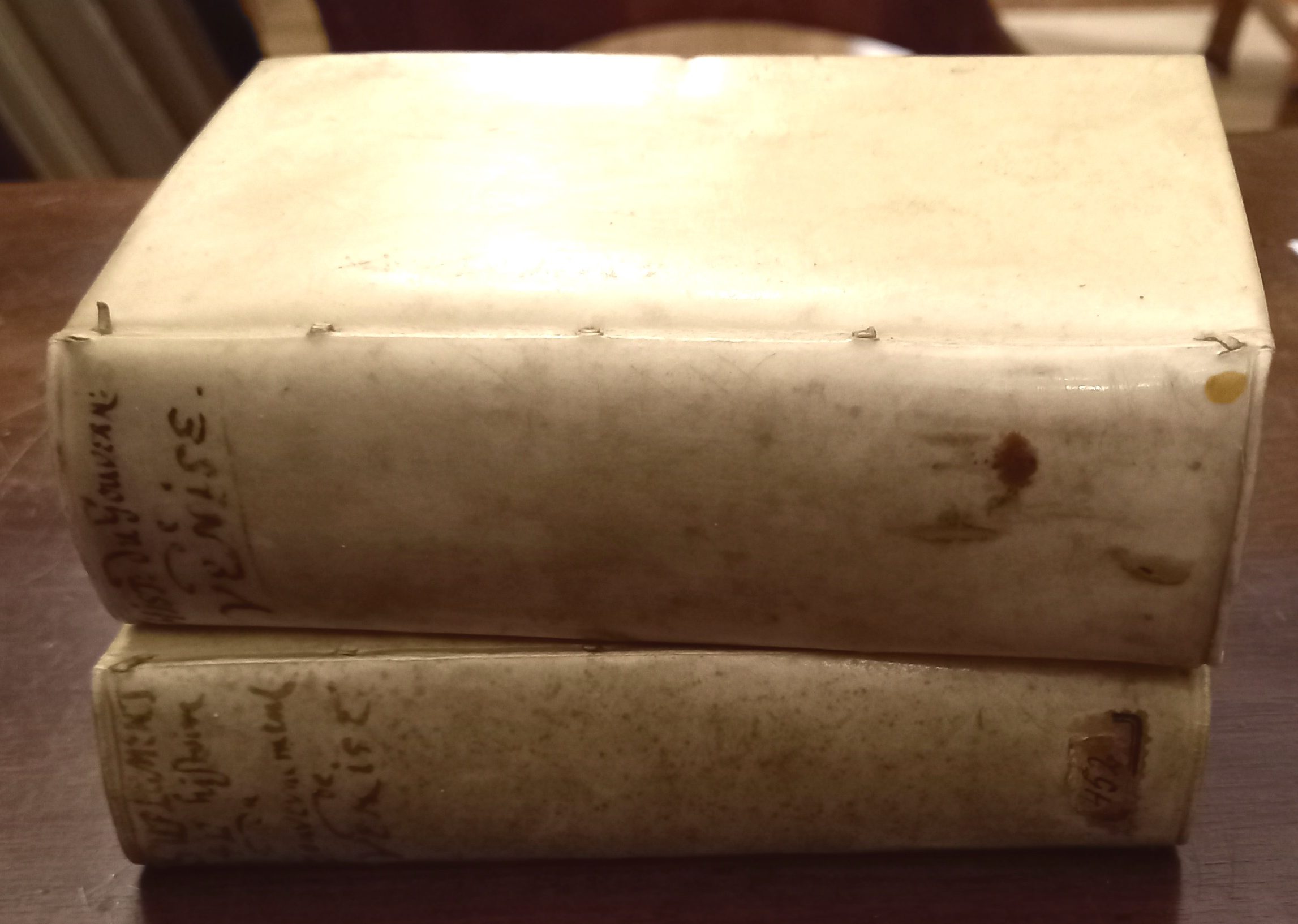
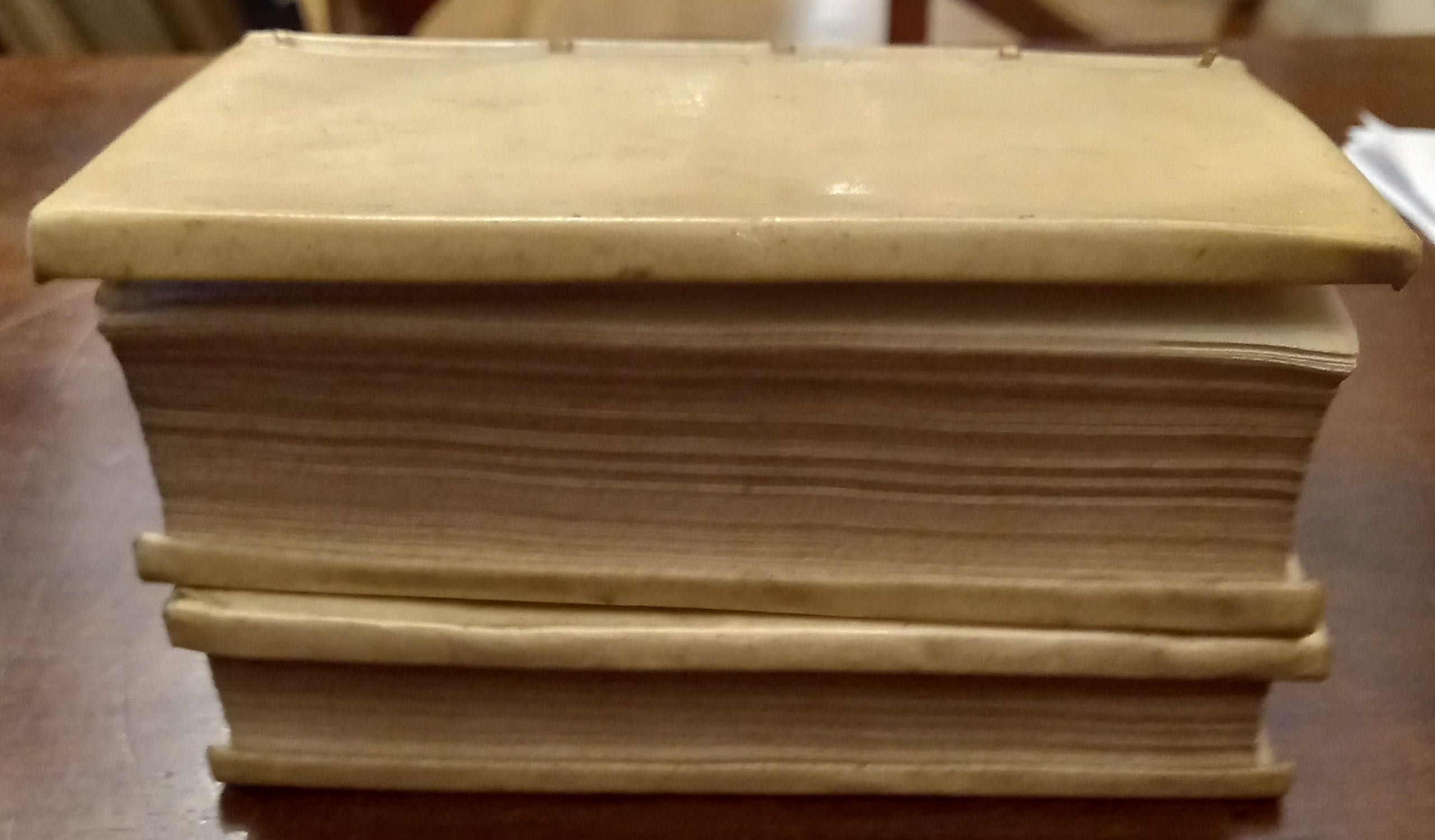
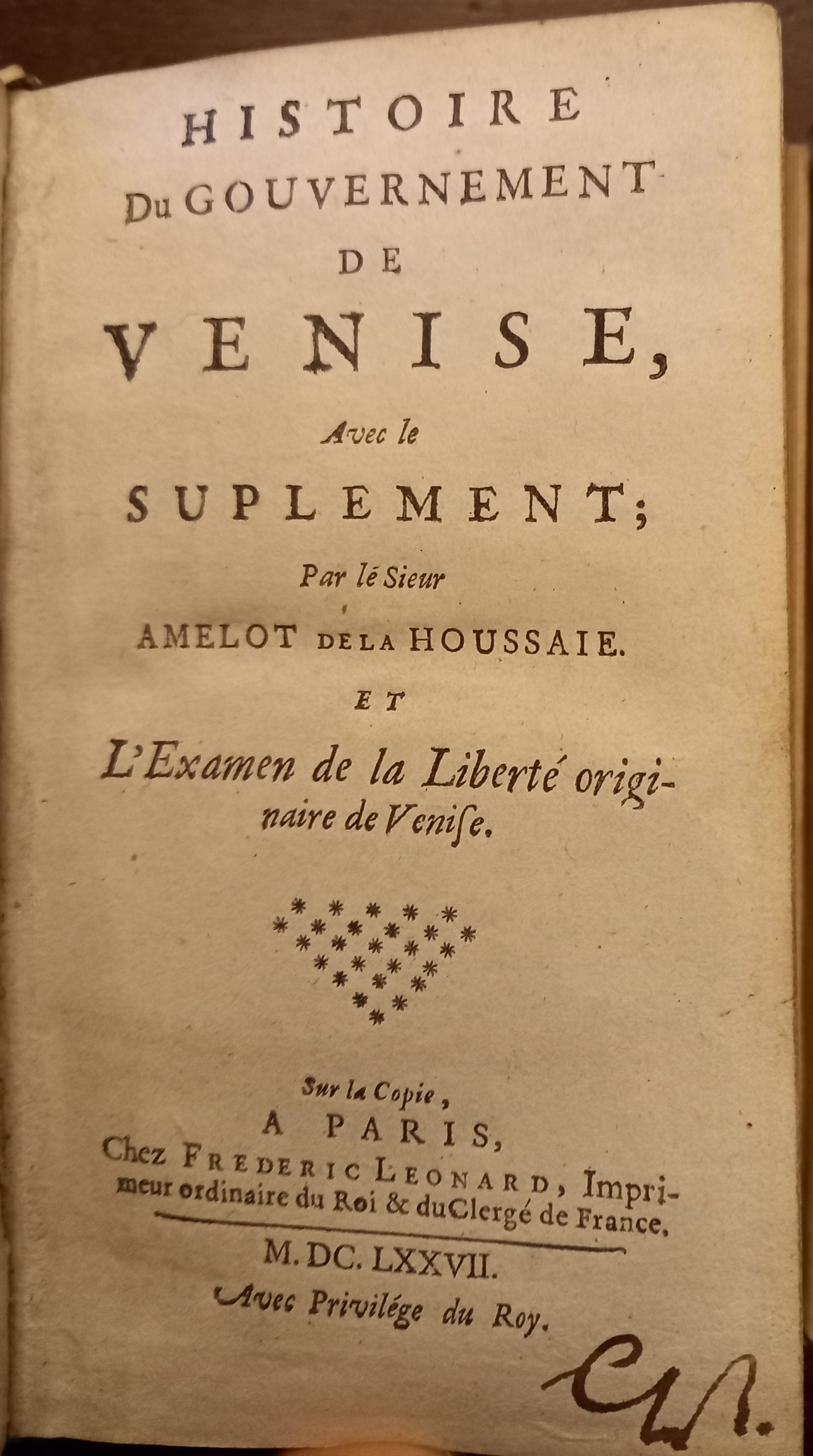
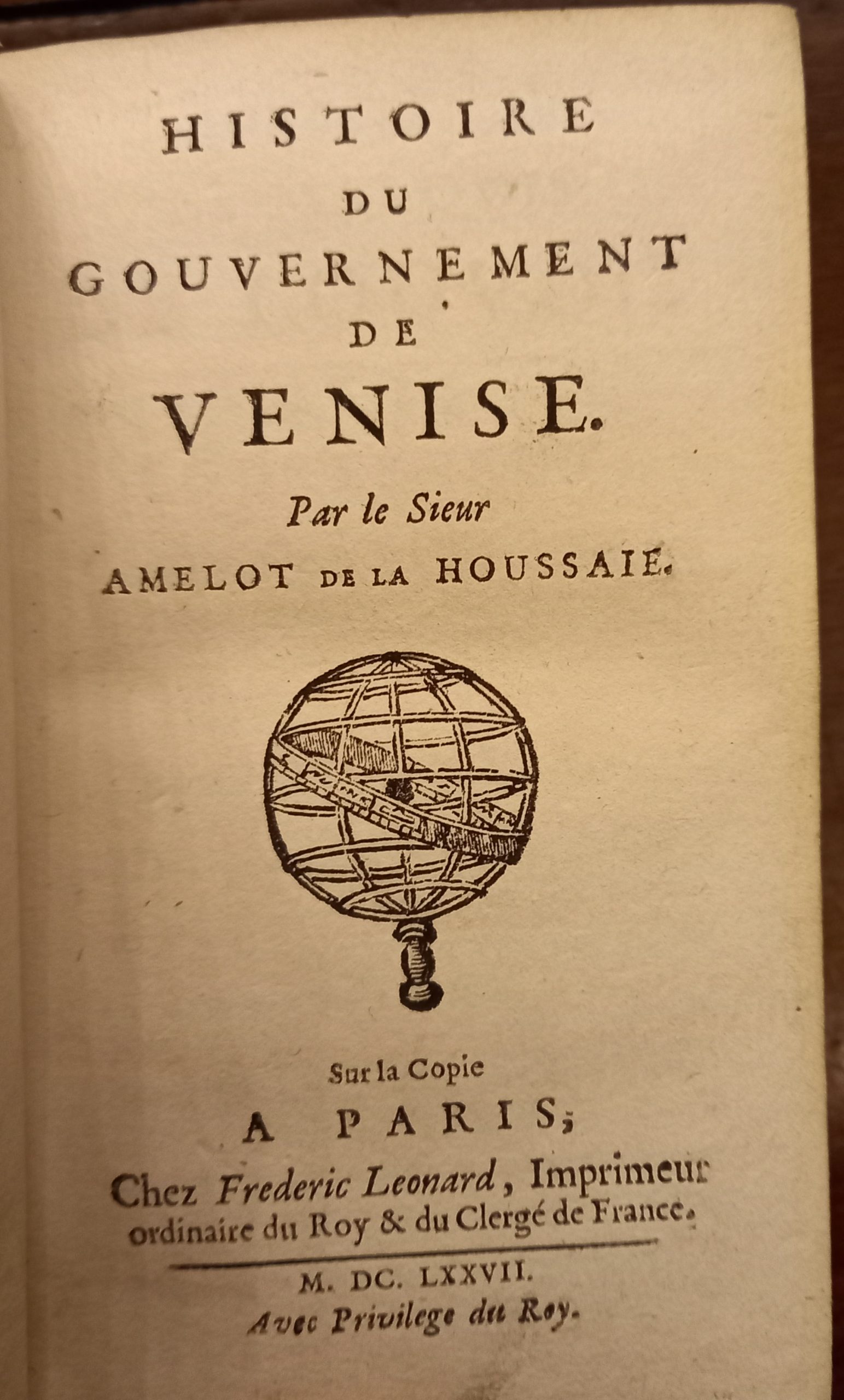
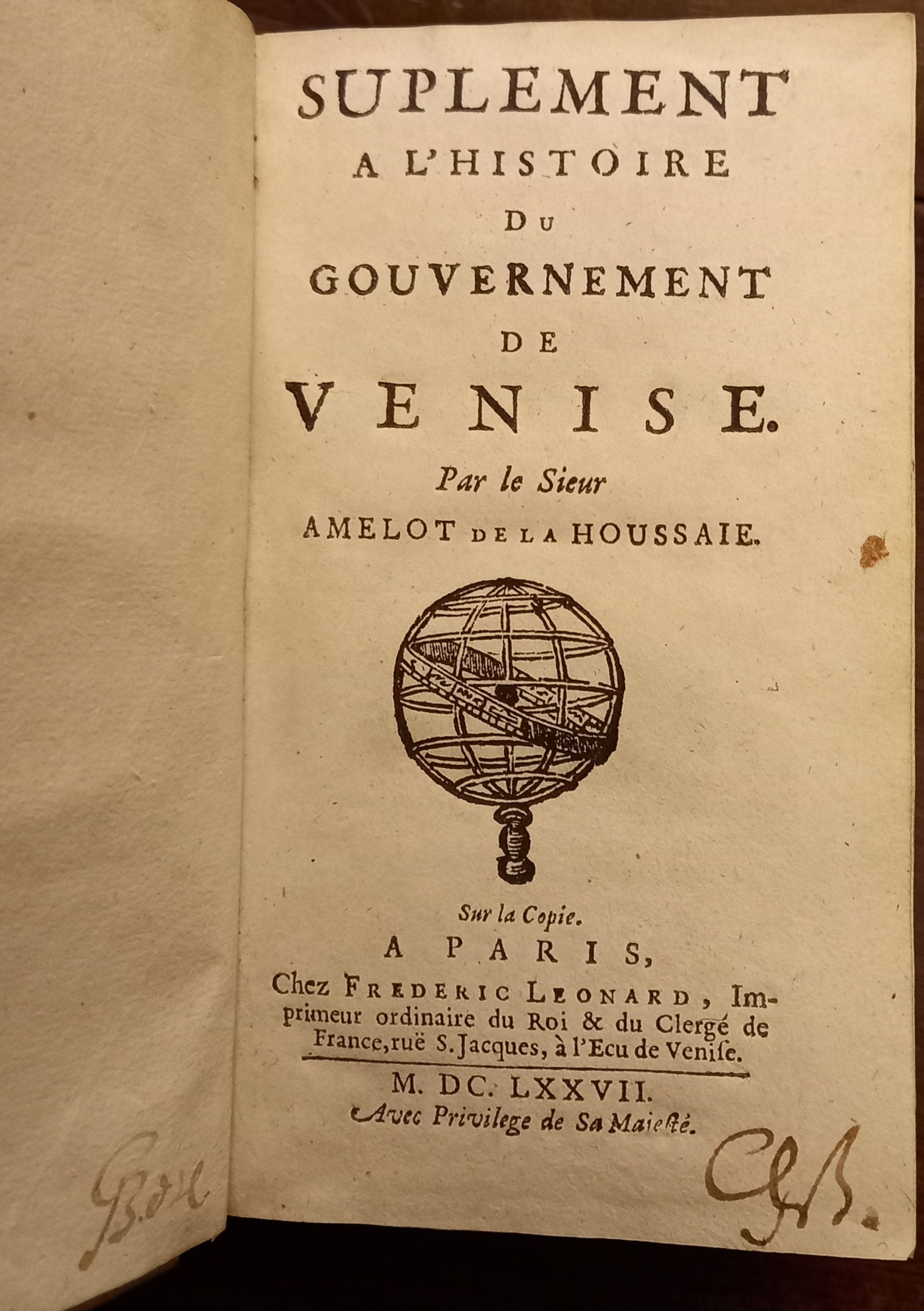
In-12 (13 cm) 2 voll (frontespizio generele) c. (antiporta) c. (22) 550 (38); 237 (3), (12) 211 (3). Piena pergamena coeva, titolo manoscritto al dorso. Ogni volume ha un ulteriore frontespizio con marca xilografica: sfera armillare. Nell’antiporta incisa: Histoire du gouvernement de Venise et l’Examen de la liberté, inoltre: Sur la copie imprimée à Paris, 1677. Come occhietto, al primo volume, variante B del primo frontespizio contenente le due altro frontespio comprendente le due opere.Abraham Nicolas (1634-1706)fu segretario dell’ambasciata di Francia a Venezia e il suo rapporto sulla Repubblica rivelò per la prima volta la politica del Governo Veneziano. fu segretario dell’ambasciata di Francia a Venezia e il suo rapporto sulla Repubblica rivelò per la prima volta la politica del Governo Veneziano. Quando il libro apparve (in francese) lo stato veneziano se ne lamentò con la corte francese e Amelot fu mandato alla Bastiglia per sei settimane. Dice il Foscarini pag.337 :”Non era mancato ingegno al sig. d’Amelot per guidare ad ottimo segno il suo Trattato sulla Repubblica di Venezia: ma due cose lo guastarono, l’animo avverso alla città nostra, e il soverchio raffinamento dell’autore”. Cicogna 156.
In-12 (13 cm) 2 vols (general title page) c. (frontispiece) c. (22) 550 (38); 237 (3), (12) 211 (3). Contemporary full parchment, manuscript title on the spine. Each volume has a further frontispiece with a woodcut mark: armillary sphere. On the frontispiece engraved: Histoire du gouvernement de Venise et l’Examen de la liberté, also: Sur la copie imprimée à Paris, 1677. As a half-title, in the first volume, variant B of the first frontispiece containing the two other frontispieces containing the two works. Abraham Nicolas (1634-1706) was secretary of the French embassy in Venice and his report on the Republic revealed for the first time the policy of the Venetian Government. He was secretary of the French embassy in Venice, and his report on the Republic revealed the Venetian government’s policies for the first time. When the book appeared (in French), the Venetian state complained to the French court, and Amelot was sent to the Bastille for six weeks. Foscarini says, p. 337: “M. d’Amelot had not lacked the talent to guide his Treatise on the Republic of Venice to a successful conclusion: but two things spoiled it: his hostile attitude toward our city and the author’s excessive refinement.” Cicogna 156.