

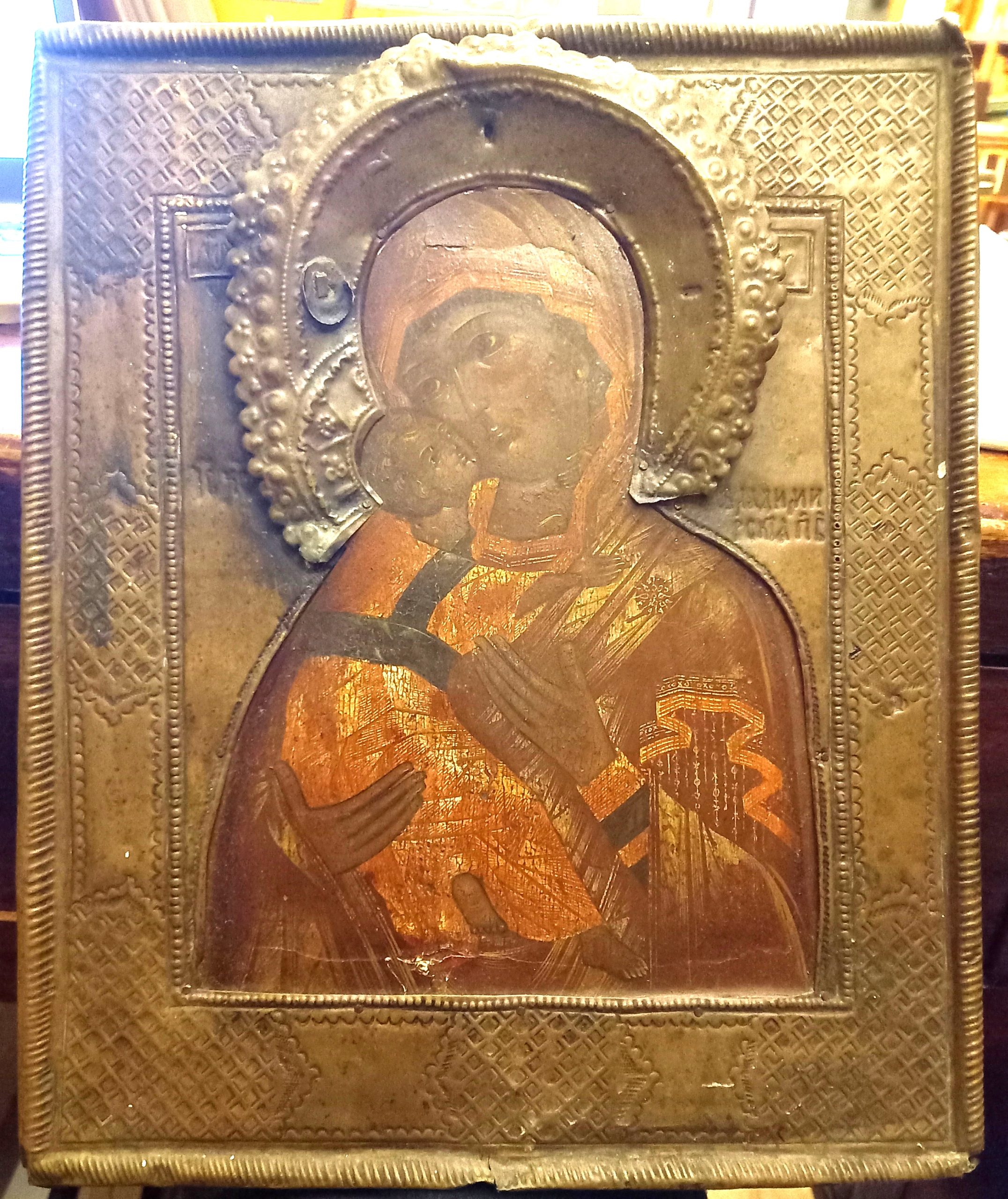
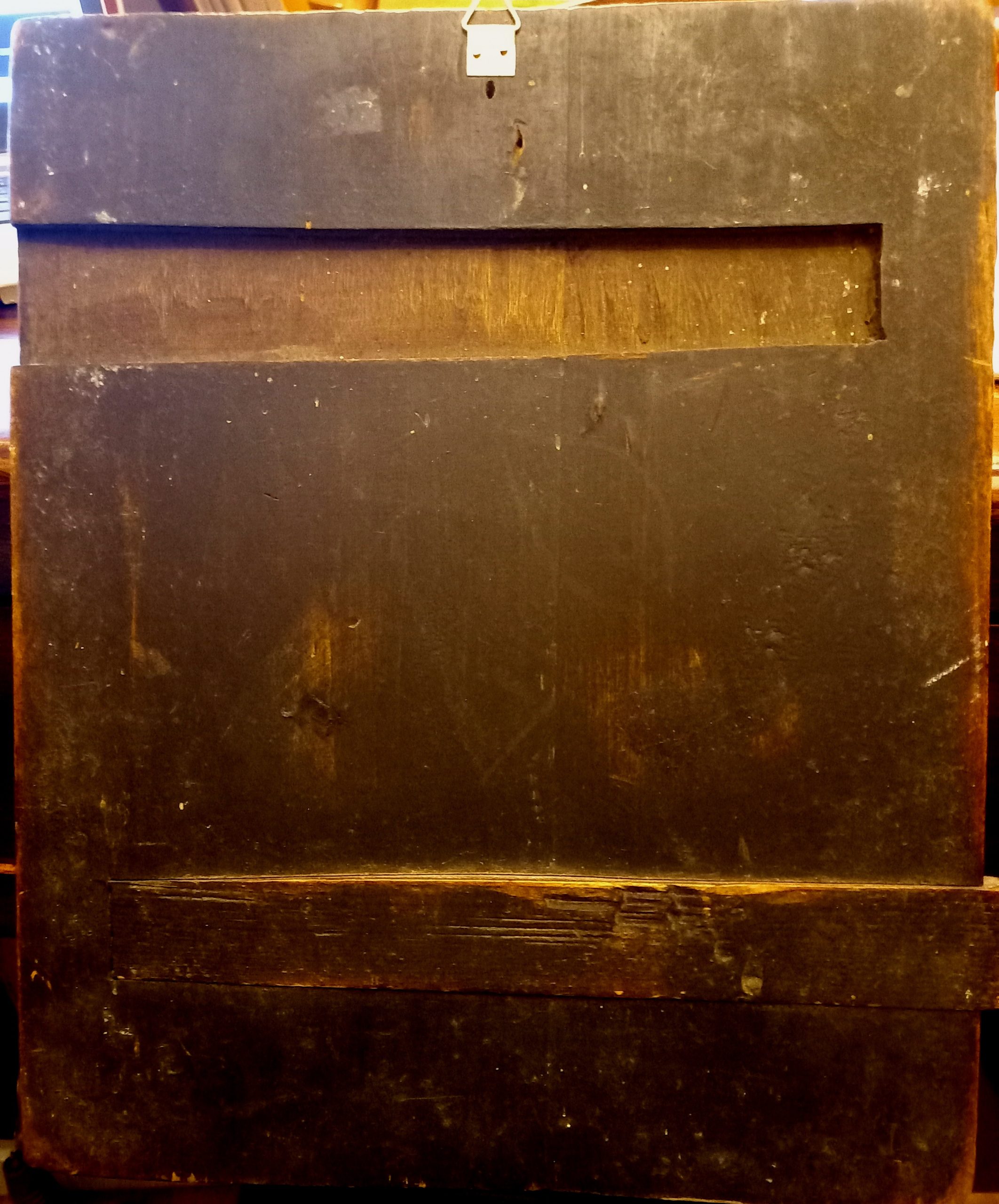
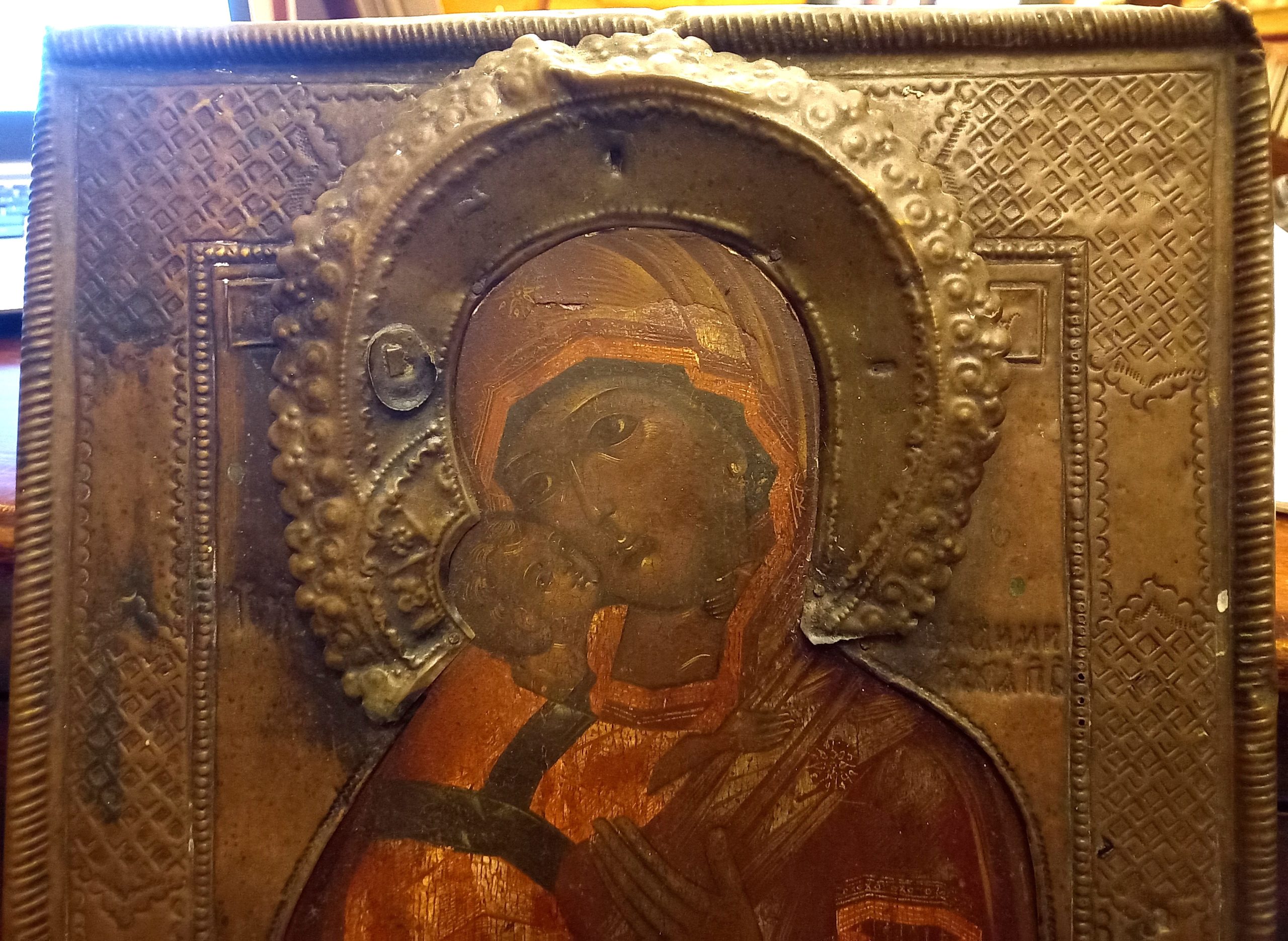
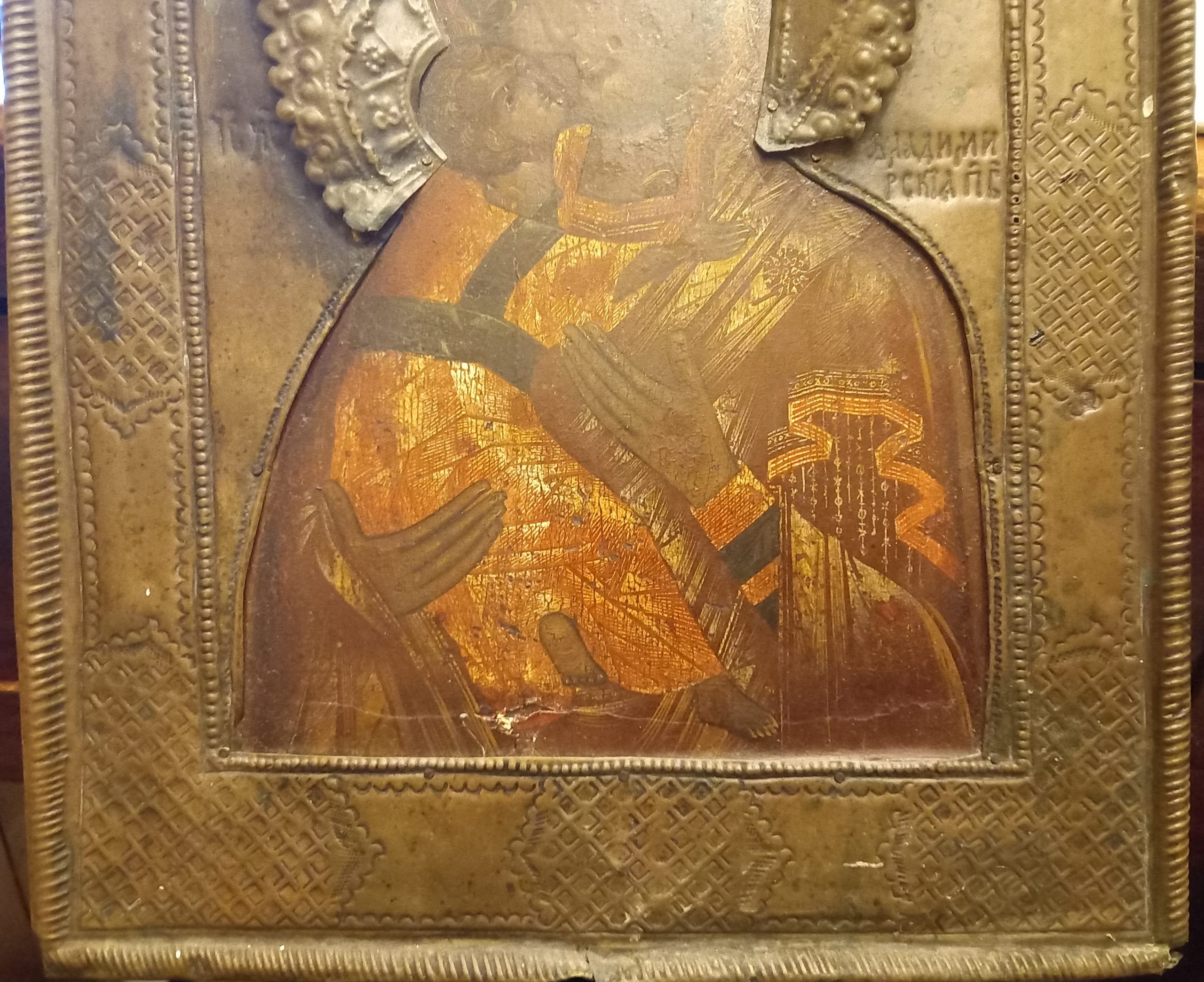
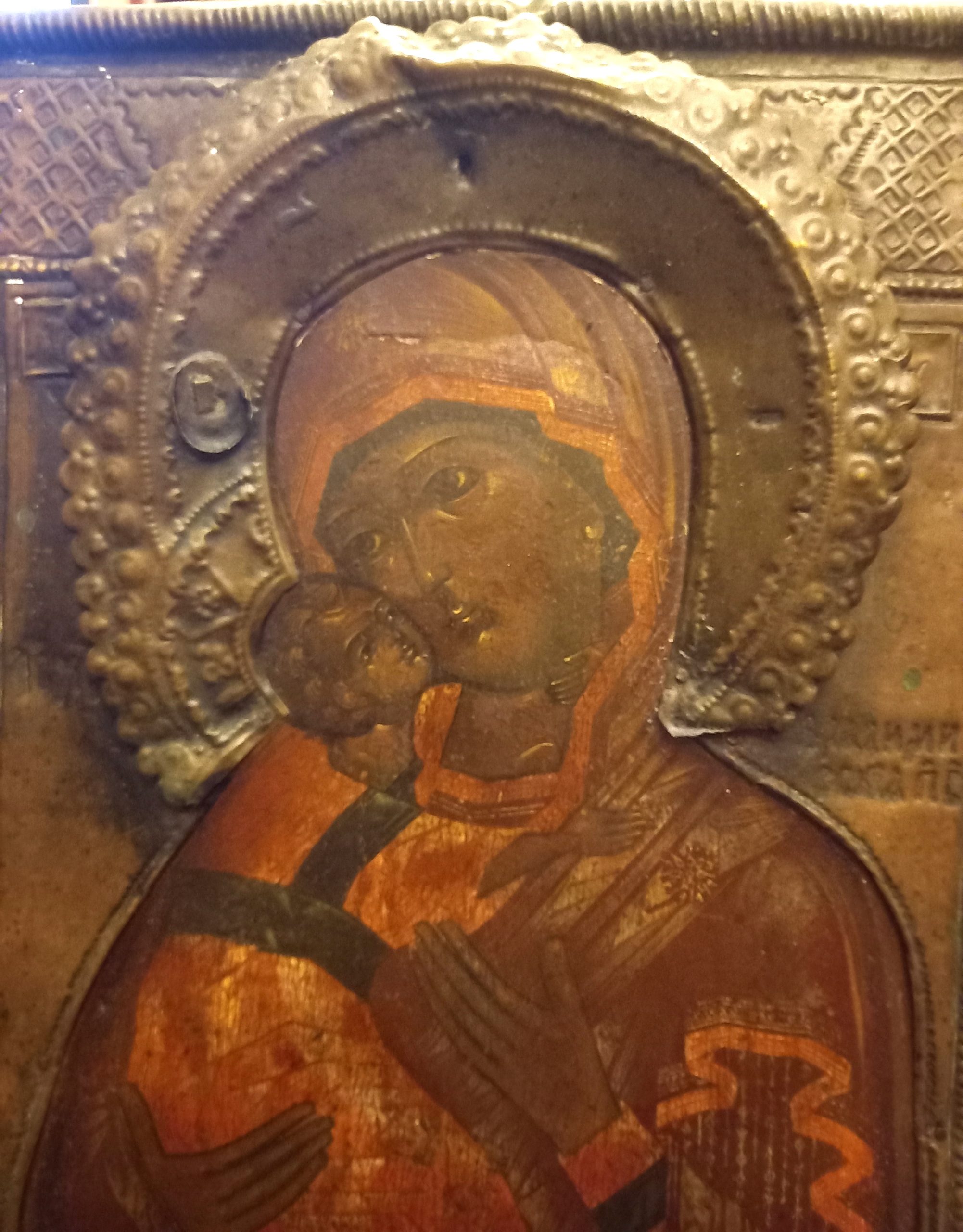
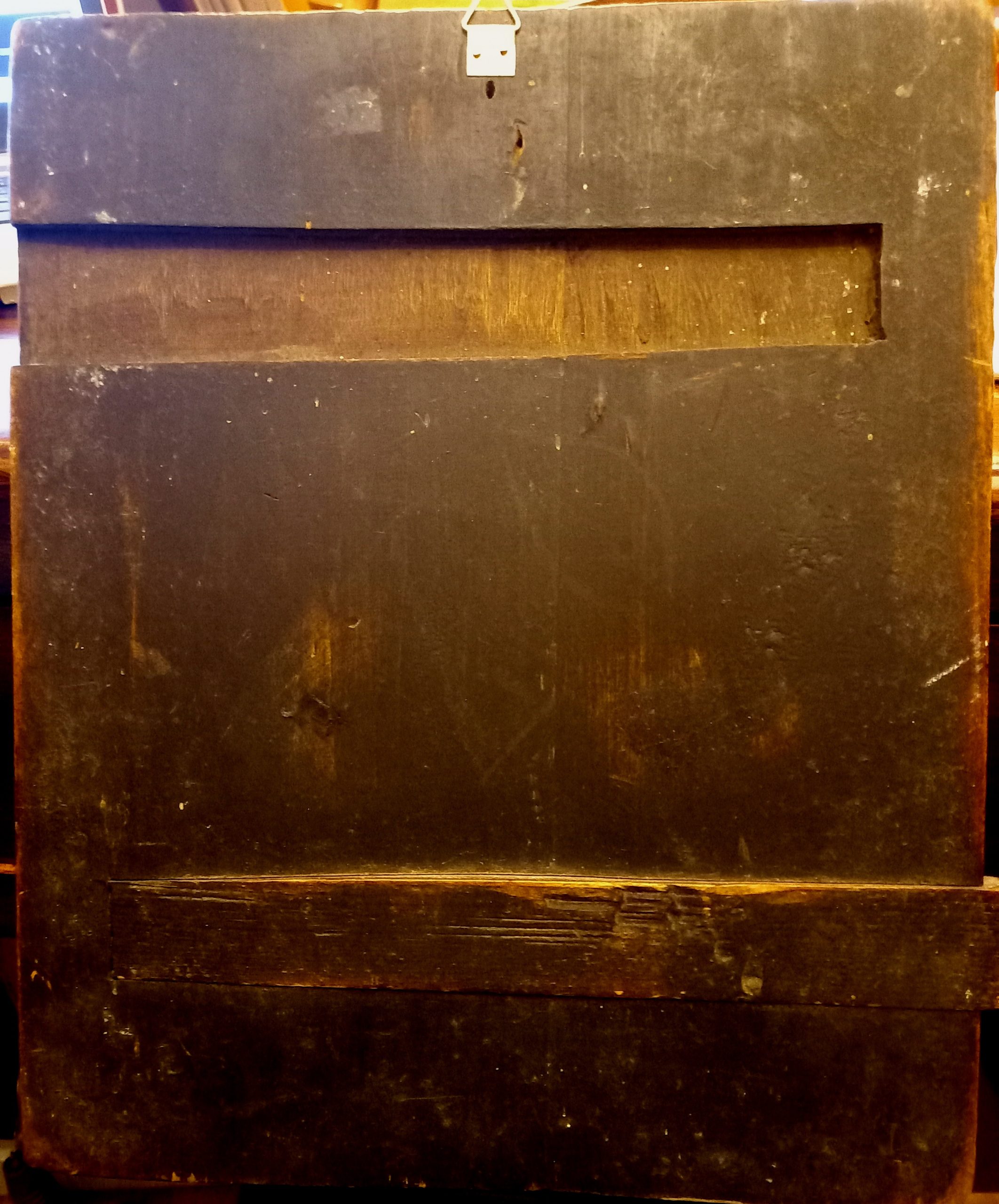
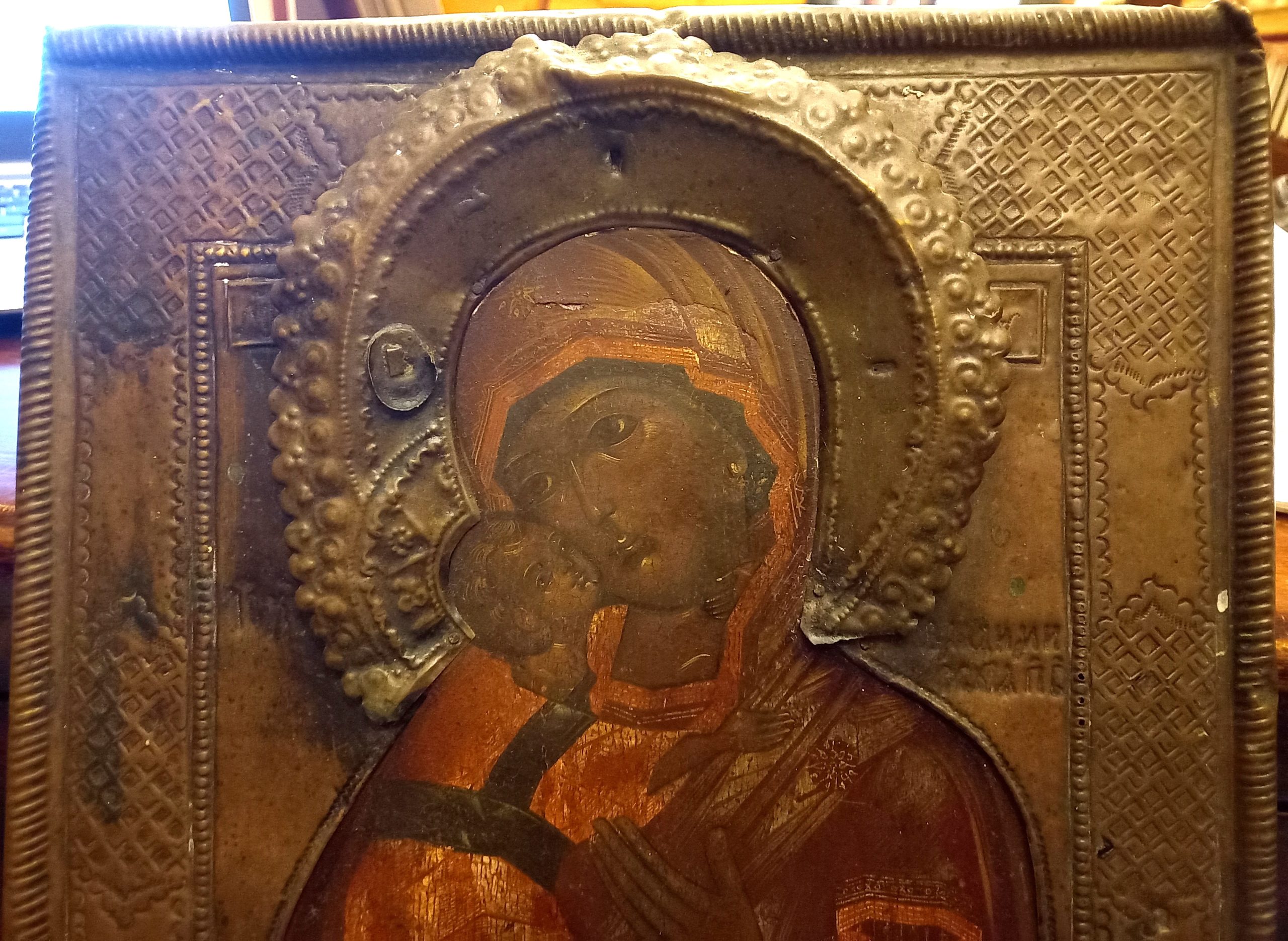
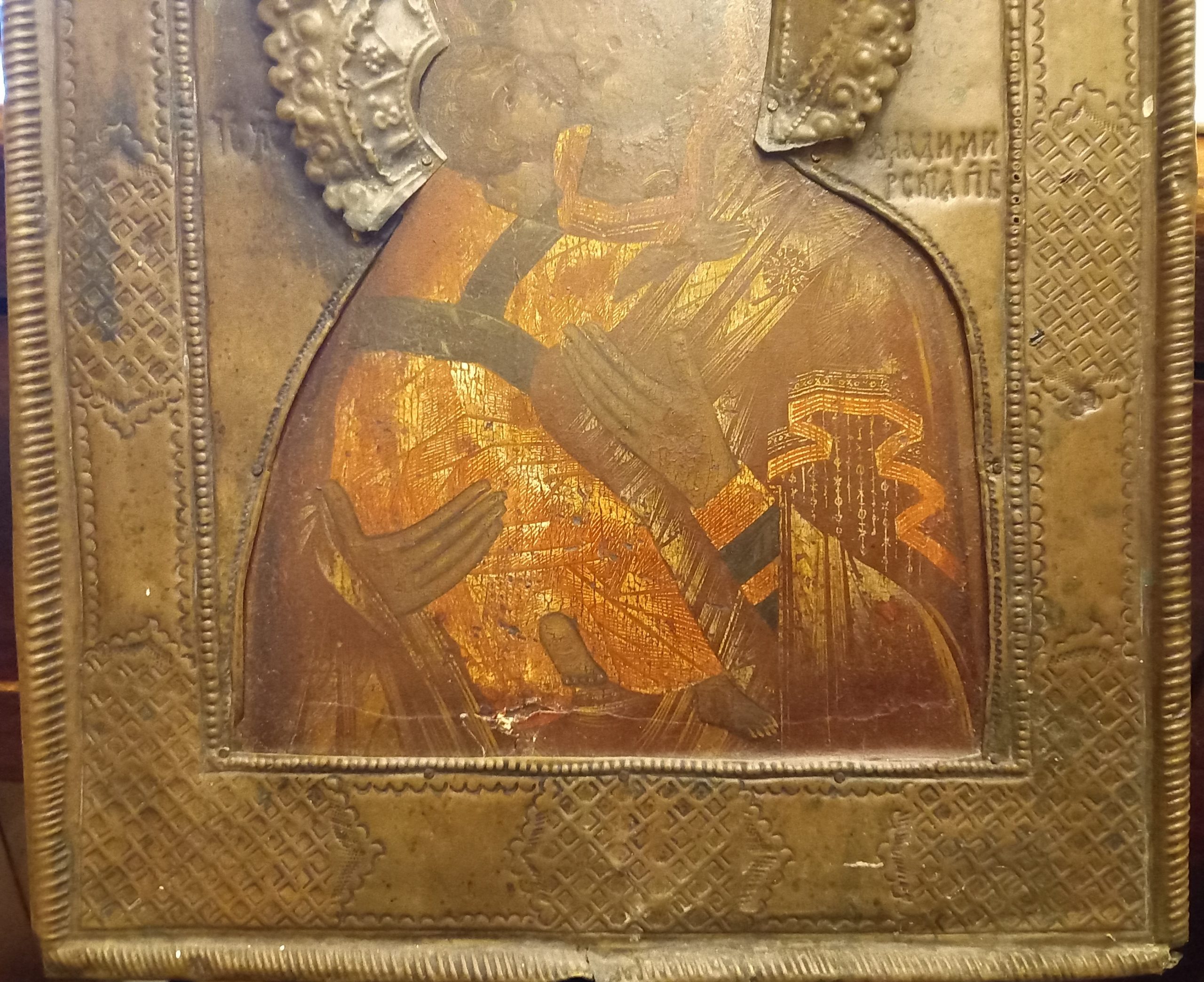
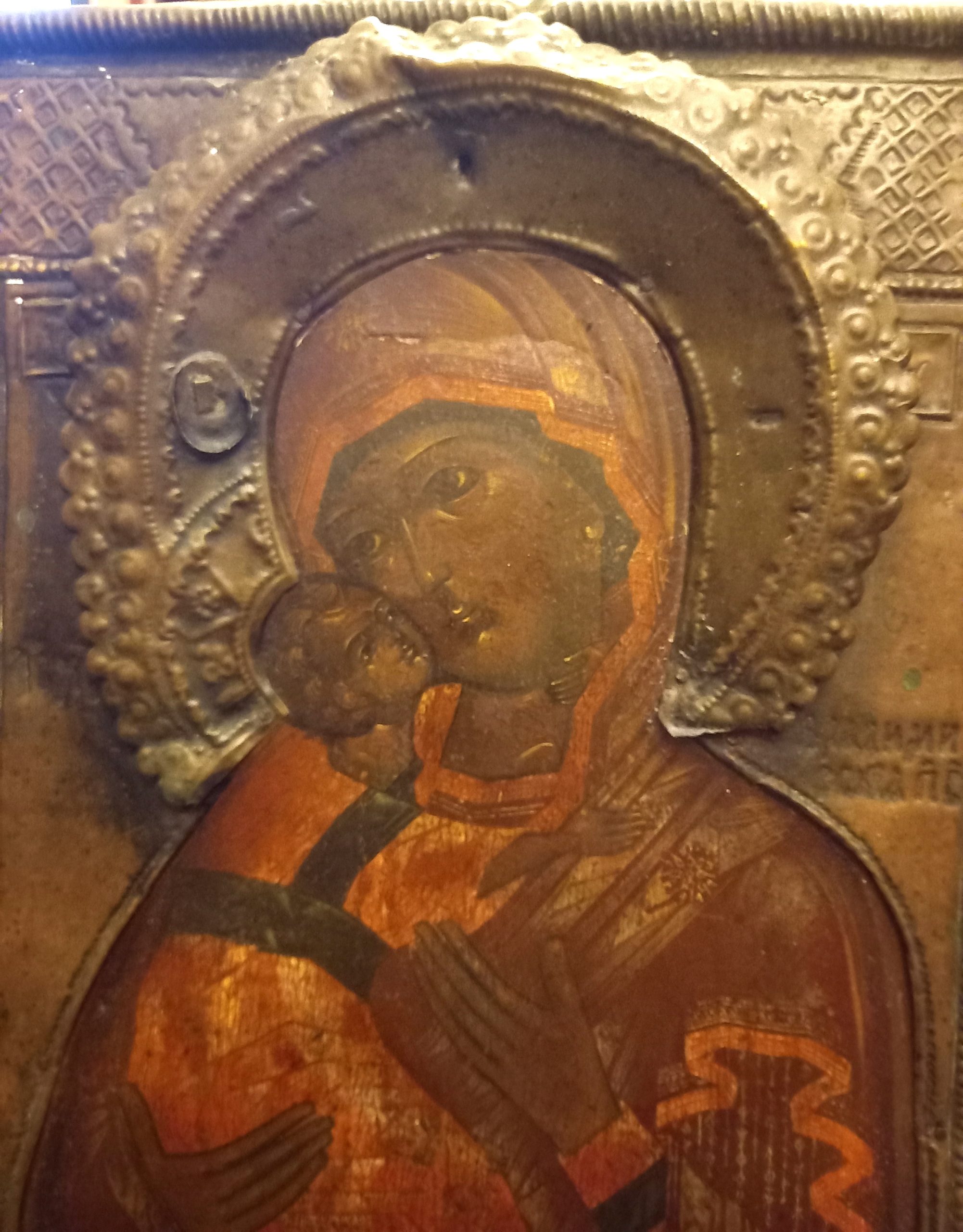
Tempera su tavola con traverse posteriori e riza in metallo sbalzato. 31 x 26 cm. L’oggetto è un’icona religiosa di stile ortodosso, raffigurante la Vergine Maria con il Bambino Gesù, un soggetto noto come Eleousa (Tenera Misericordia) o in questo caso, molto probabilmente, la Madonna di Vladimir (come suggerisce l’iscrizione parzialmente visibile).A partire dalla metà del XIX secolo, in Russia si diffuse notevolmente la produzione di icone destinate a un vasto pubblico, spesso realizzate con pittura di base più semplice ma impreziosite da rize (oklad) in metallo sbalzato (ottone o rame argentato). Questa tecnica di lavorazione del metallo, spesso prodotta in serie e con motivi ripetuti come quello a griglia visibile sul bordo, era tipica delle botteghe di orafi e argentieri attive nei grandi centri come Mosca o San Pietroburgo durante l’epoca zarista. La Vergine Maria è raffigurata in un atteggiamento affettuoso, con la guancia accostata a quella del Bambino Gesù. Il Bambino ha un braccio intorno al collo della Madre. Dipinta su un pannello di legno, la riza, di un colore brunito, probabilmente ottone o lega di rame ossidata, copre gran parte della pittura, lasciando scoperti solo i volti e le mani. Il retro del pannello di legno mostra una costruzione a tavola con due traverse orizzontali in alto e in basso, tipiche delle icone per prevenire la curvatura del legno. Presenta motivi decorativi a rilievo (punzonati o stampati) attorno al bordo e nell’area delle aureole. La parte superiore dell’aureola ha una forma ad arco. La pittura sotto la riza è scura e consumata in alcune aree. La riza stessa è ossidata e presenta una patina scura e verdastra in alcuni punti, oltre a un foro nella parte superiore (forse per appenderla o da usura). L’usura del legno sul retro è visibile, specialmente lungo i bordi e nelle traverse. Le vesti della Vergine e del Bambino hanno dettagli stilizzati dipinti. Si notano deboli iscrizioni in cirillico (lingua slava ecclesiastica) sul bordo superiore destro della riza e forse sul fondo oro visibile. Una parte sembra recitare ВЛАДИМИР o parte di esso, suggerendo l’identificazione come la Madonna di Vladimir (una delle icone più venerate in Russia). Le mani del Bambino e della Vergine sono visibili e dipinte con attenzione. L’icona è quasi certamente di scuola russa (o di un’area fortemente influenzata dalla tradizione russa, come alcune parti dell’Europa orientale). L’uso della riza (il rivestimento metallico che copre la pittura) è una pratica distintiva dell’arte sacra russa, soprattutto a partire dal XVII secolo e in particolare nel periodo successivo.
Tempera on panel with backing and embossed metal riza. The object is a religious icon in the Orthodox style, depicting the Virgin Mary with the Infant Jesus, a subject known as Eleousa (Tender Mercy) or in this case, most likely, the Madonna of Vladimir (as suggested by the partially visible inscription). From the mid-19th century, the production of icons intended for a wide audience became widespread in Russia, often made with simpler base paint but embellished with embossed metal riza (oklad) (brass or silver-plated copper). This metalworking technique, often mass-produced and with repeating motifs such as the grid visible on the edge, was typical of the goldsmiths’ and silversmiths’ workshops active in major centers such as Moscow or St. Petersburg during the Tsarist era. The Virgin Mary is depicted in an affectionate pose, with her cheek pressed to that of the Infant Jesus. The Child has an arm around his mother’s neck. Painted on a wooden panel, the riza, a burnished color, probably brass or an oxidized copper alloy, covers most of the painting, leaving only the faces and hands exposed. The back of the wooden panel features a panel construction with two horizontal crosspieces at the top and bottom, typical of icons to prevent the wood from warping. It features decorative relief motifs (punched or stamped) around the edge and in the area of the haloes. The upper part of the halo is arched. The paint beneath the riza is dark and worn in some areas. The riza itself is oxidized and has a dark, greenish patina in some places, as well as a hole at the top (perhaps for hanging or wear). Wear to the wood on the back is visible, especially along the edges and in the crosspieces. The robes of the Virgin and Child have stylized painted details. Faint inscriptions in Cyrillic (Church Slavonic) can be seen on the upper right edge of the riza and perhaps on the visible gold background. One section appears to read ВЛАДИМИР or part of it, suggesting identification as the Madonna of Vladimir (one of the most venerated icons in Russia). The hands of the Child and the Virgin are visible and carefully painted. The icon is almost certainly of the Russian school (or from an area strongly influenced by the Russian tradition, such as some parts of Eastern Europe). The use of the riza (the metal covering that covers the painting) is a distinctive practice in Russian sacred art, especially from the 17th century onwards and particularly in the later period.