

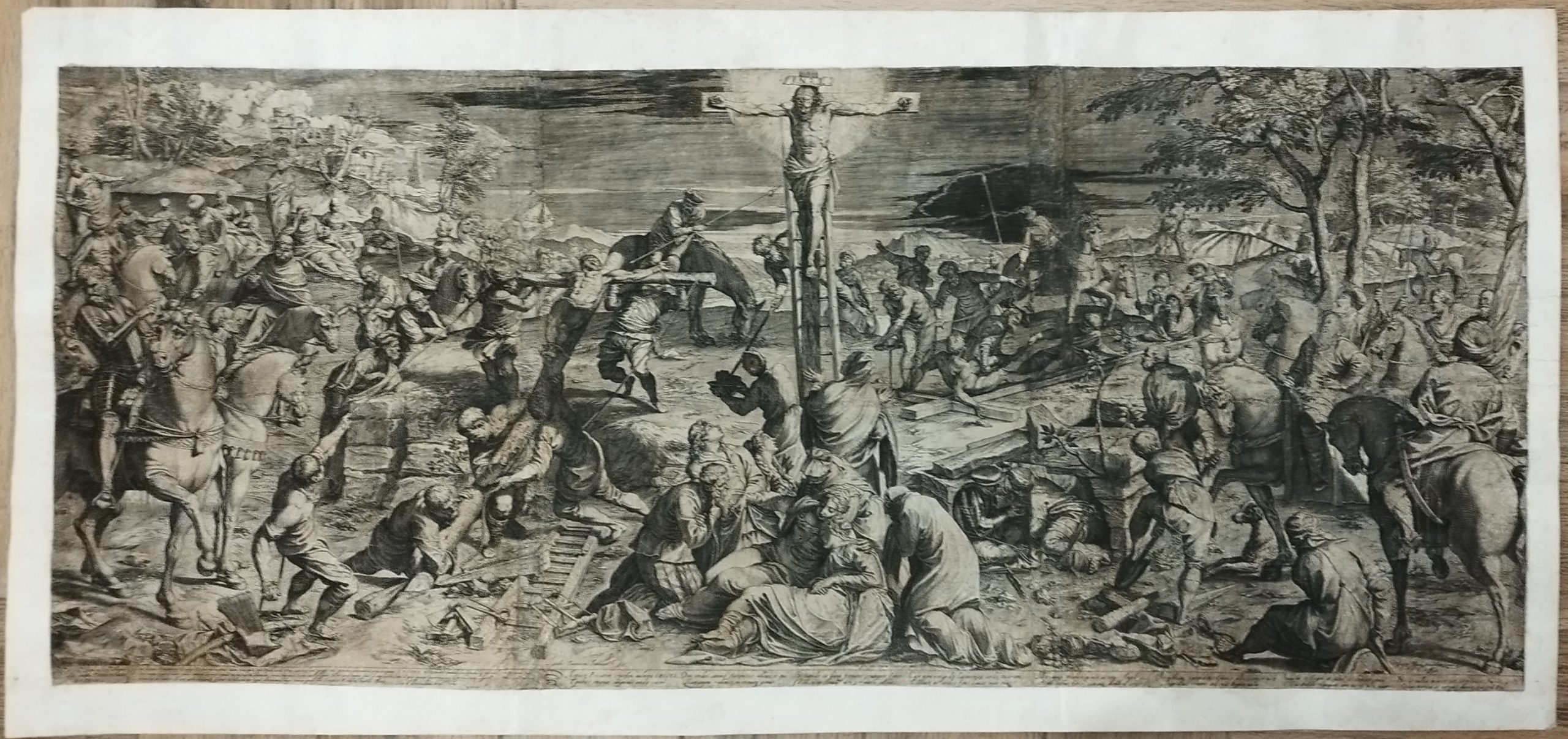
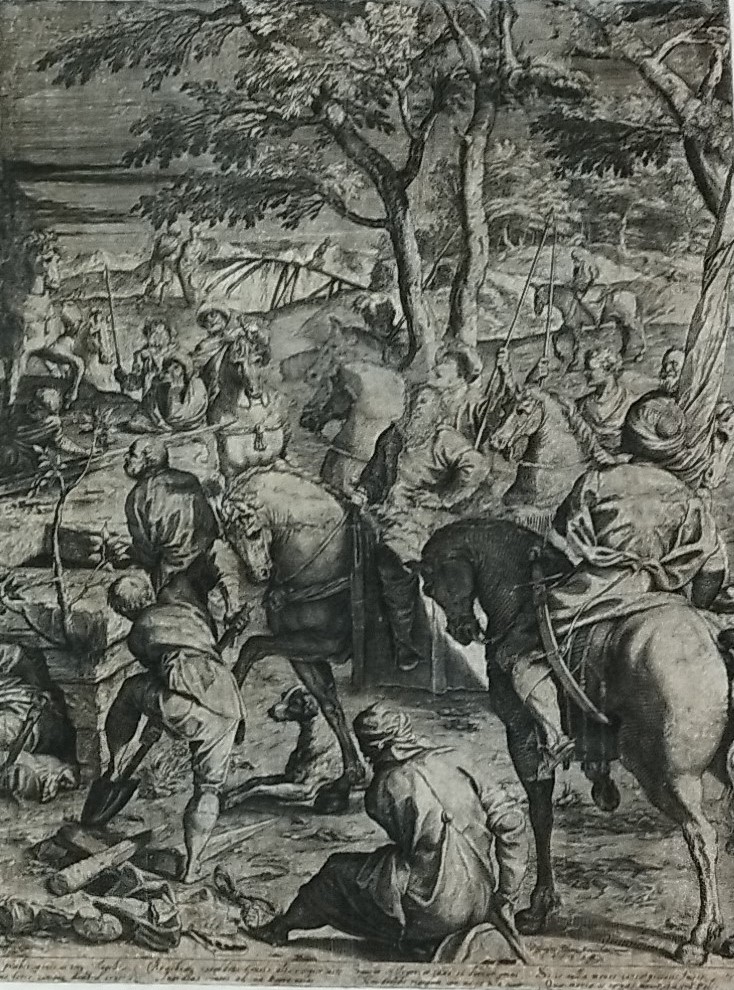
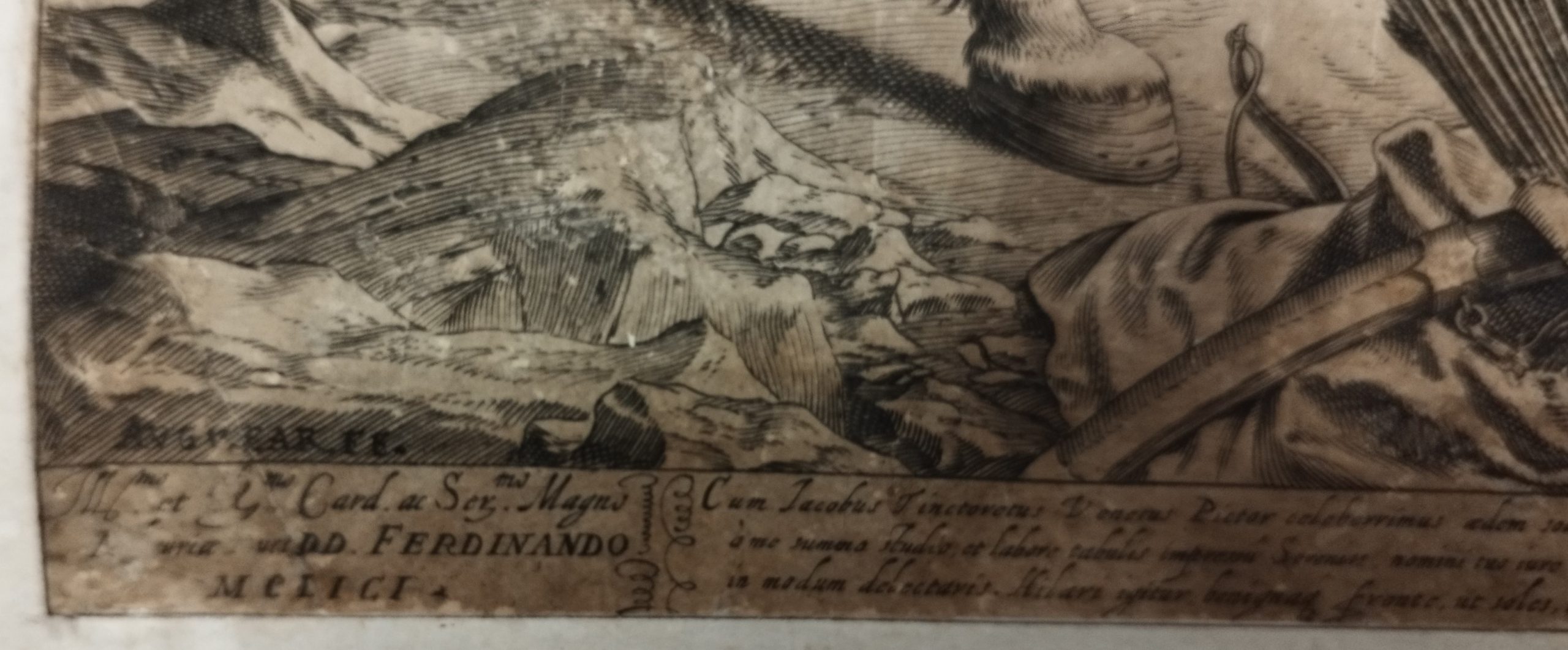
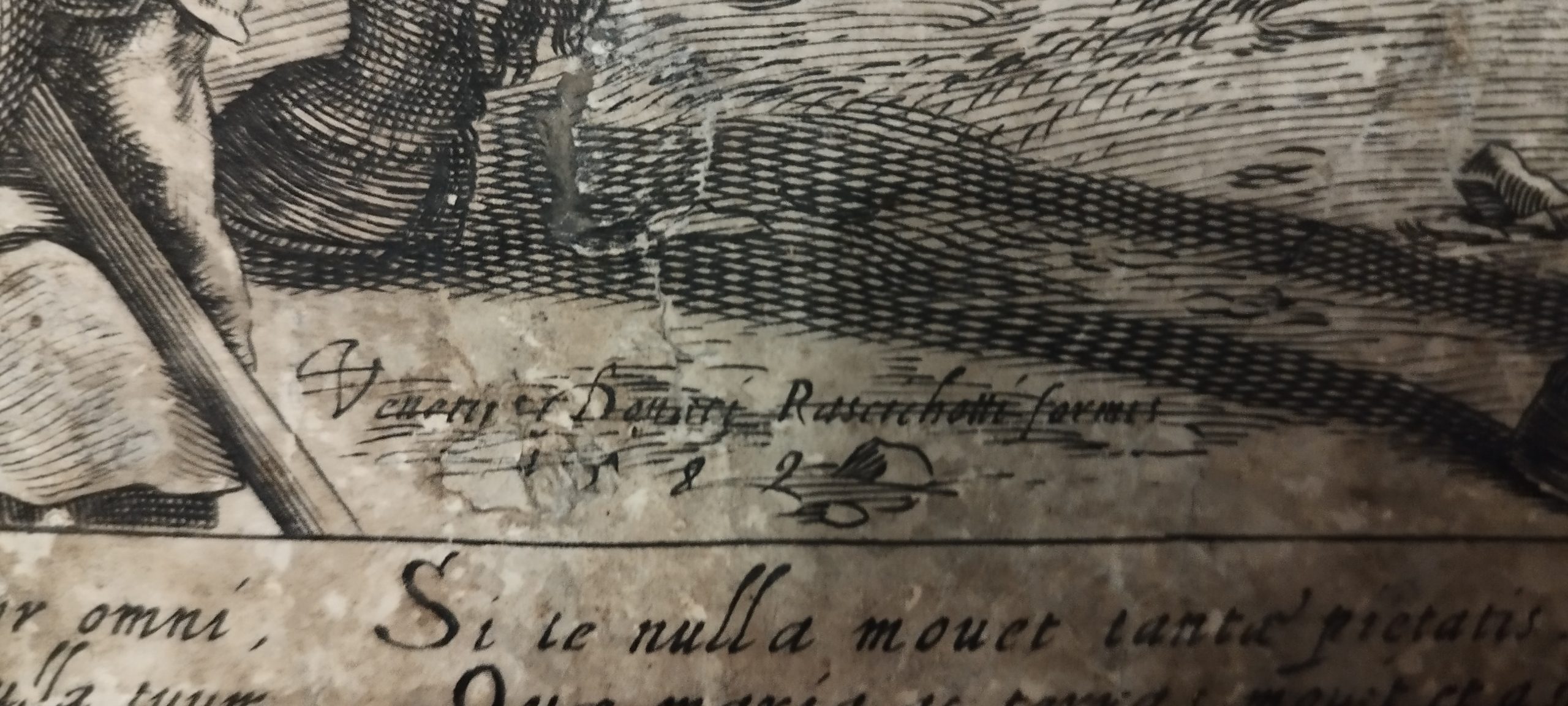
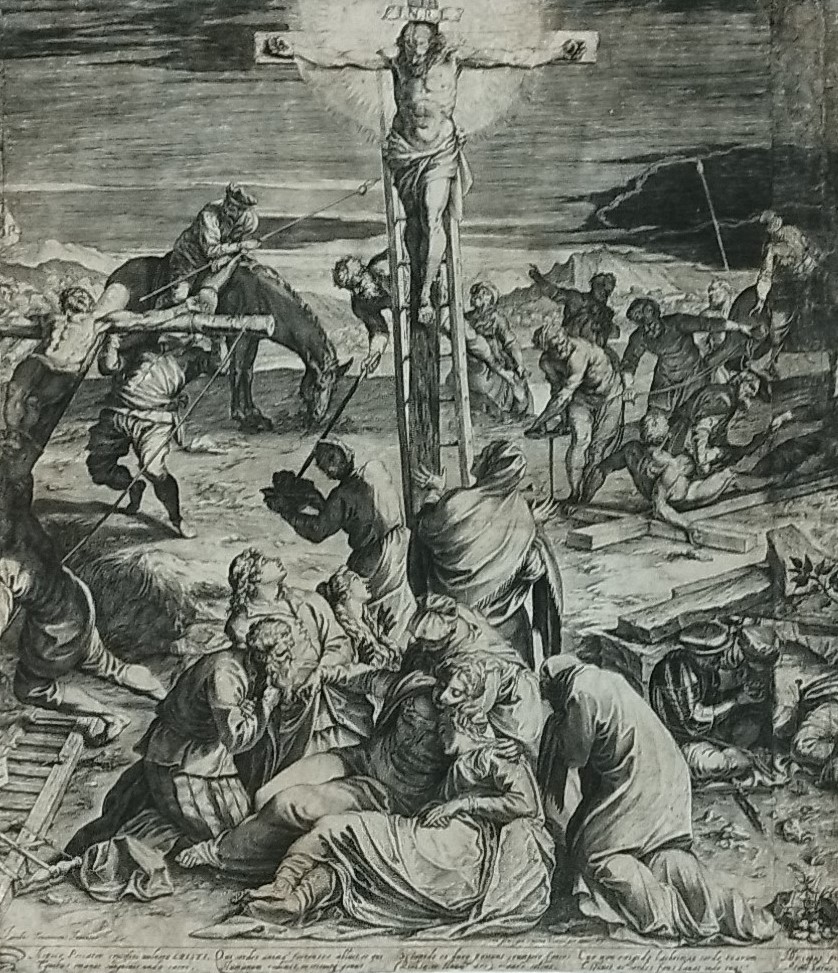
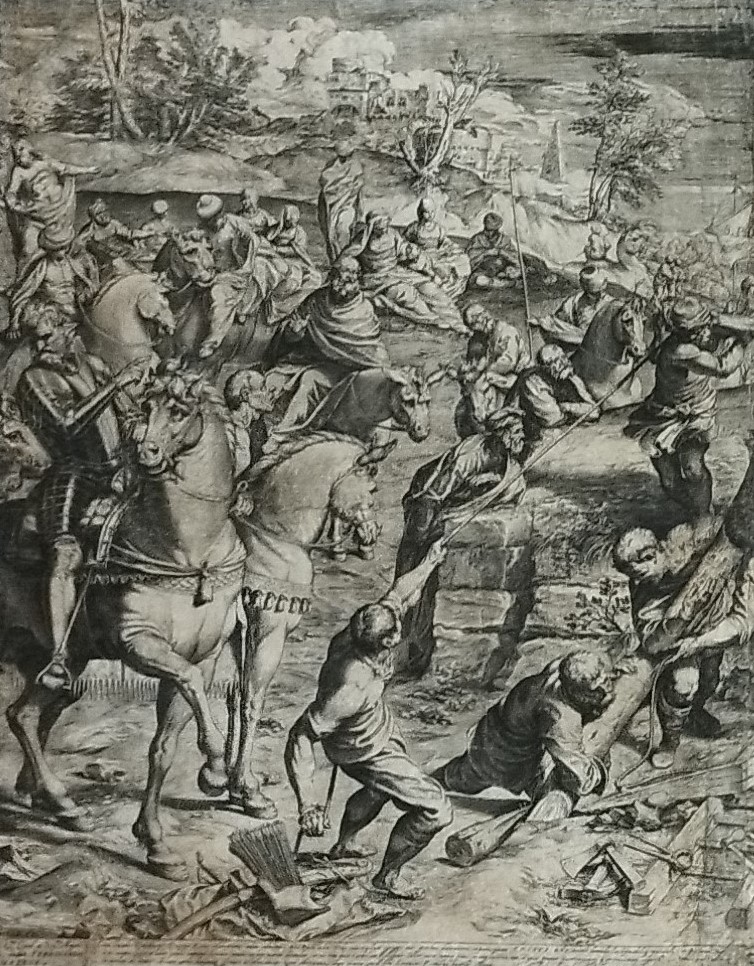
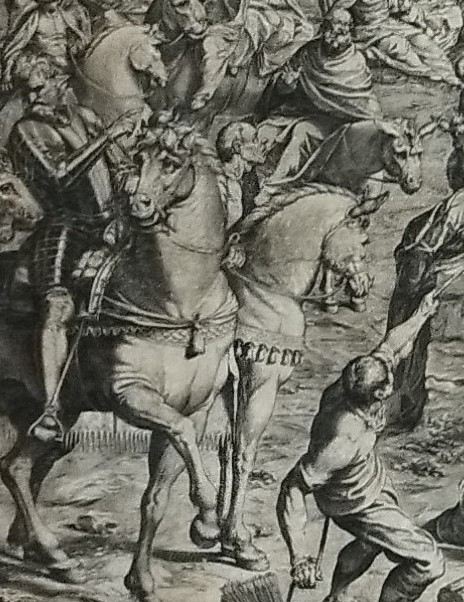
Incisione a bulino, su tre fogli. di 510 x 1200 mm, applicata in antico su foglio vergellato. Secondo stato su due con la aggiunta in basso a sinistra “Augu. Car. Fe”; sopra il bordo inferiore del foglio centrale “cum privilegio Senatus Veneti per anno 15”; in basso a sinistra del foglio centrale “Jacobus Tintoretus Inventor”; nel foglio di destra, in basso sopra il margine “Venetijs Donati Rascichotti formis / 1589. Sul bordo del foglio di sinistra una dedica a Ferdinando de’ Medici e una lunga scritta sul bordo. Questa stampa, che riproduce la la grande Crocifissione di Tintoretto per la Sala dell’Albergo della Scuola Grande di San Rocco a Venezia, è probabilmente la più elaborata di Agostino Carracci. Fu così popolare da indurre il Tintoretto in persona a considerarla di valore equivalente al suo grande dipinto Riporta infatti il Boschini queste parole del pittore “Compare, sta Passion no l’ha intagià quel ecelente e degno Intagiador, e valoroso e gran dissegnator, quell’Augustin Carazza nominà? La ghe xe certo, e tanto l’è ben fata che la rende stupor grando in efeto; e quando el la mostrerete al Tintoreto, el ghe disse: Augustin, ti ha fatto pata”. Secondo il Bellori, a seguito della ammirazione per questa stampa, nacque una tanto amichevole relazione tra i due pittori che Tintoretto fece da padrino al battesimo del figlio di Carracci, Antonio. Il Boschini aggiunge anche che Daniel Nis avesse portato nelle Fiandre le lastre della incisione e provveduto a farle dorare per evitarne il deterioramento. Si tratta quindi di una delle stampe più significative del tardo rinascimento veneziano. Baglione p. 390; Bellori p. 110, 115; Boschini p. 146-147; Malvasia p. 74-75, 282, 293; Oretti p. 793; Mariette II p. 54; Basan p 110; Strutt p. 181; Heinecken p. 63 n 21; Gori Gandelli p. 318 n XIII; Joubert p.347; Bolognini Amorini p 55; Nagler 1835 p. 392; Nagler I 1451; Mariette III, 64; LeBlanc 48; Andresen 4; Foratti p. 171; Kristeller p. 283; Pittaluga pp 343, 366 nota 6; Petrucci p. 137; Bodmer 1940 pp 49-50; Mostra-dipinti p. 82; Mostra-Disegni numero 257; Calvesi/Casale 37; Ostrow 42; Bertelà 153. De Grazia (p.153-155).
Chiselled engraving, on three sheets measuring 510 x 1200 mm, mounted in the original period on laid paper. Second state of two, with the addition in the lower left-hand corner ‘Augu. Car. Fe’; above the lower edge of the central sheet ‘cum privilegio Senatus Veneti per anno 15’; in the lower left-hand corner of the central sheet ‘Jacobus Tintoretus Inventor’; on the right-hand sheet, at the bottom above the margin ‘Venetijs Donati Rascichotti formis / 1589’. On the edge of the left-hand sheet is a dedication to Ferdinando de’ Medici and a long inscription along the margin. This print, which reproduces Tintoretto’s large Crucifixion for the Sala dell’Albergo of the Scuola Grande di San Rocco in Venice, is probably Agostino Carracci’s most elaborate work. It was so popular that it led Tintoretto himself to consider it of equal value to his own great painting. Indeed, Boschini quotes the painter as saying: ‘My friend, hasn’t this Passion been engraved by that excellent and worthy engraver, that valiant and great draughtsman, the one called Augustin Carazza? ‘It certainly is, and it is so well done that it truly leaves one in awe; and when you showed it to Tintoretto, he said to you: “Augustin, you’ve outdone me.”’ According to Bellori, such was the admiration for this print that a very friendly relationship developed between the two painters, to the extent that Tintoretto acted as godfather at the christening of Carracci’s son, Antonio. Boschini also adds that Daniel Nis had taken the plates of the engraving to the Low Countries and arranged for them to be gilded to prevent it from deteriorating. It is therefore one of the most significant prints of the late Venetian Renaissance. Baglione p. 390; Bellori p. 110, 115; Boschini p. 146–147; Malvasia pp. 74–75, 282, 293; Oretti p. 793; Mariette II p. 54; Basan p. 110; Strutt p. 181; Heinecken p. 63 n. 21; Gori Gandelli p. 318 n. XIII; Joubert p. 347; Bolognini *Amorini*, p. 55; Nagler 1835, p. 392; Nagler I, 1451; Mariette III, 64; LeBlanc, 48; Andresen, 4; Foratti, p. 171; Kristeller, p. 283; Pittaluga, pp. 343, 366, note 6; Petrucci p. 137; Bodmer 1940 pp. 49–50; Exhibition of Paintings p. 82; Exhibition of Drawings no. 257; Calvesi/Casale 37; Ostrow 42; Bertelà 153. De Grazia (pp. 153–155).